
For a long period after World War II, the undamaged Swiss economy experienced very little unemployment, and it grew approximately 5 percent per year in the 1950s and ’60s. During this period, foreign policy was virtually reduced to negotiating bilateral trade agreements.
Because Switzerland avoided multilateral ties that could affect its sovereignty, it resisted European integration efforts. Thus, it did not join the European Economic Community (later succeeded by the European Union [EU]); instead it was a founding member of the European Free Trade Association (EFTA) in 1960.
Switzerland’s economic growth rapidly changed the landscape and the living standard, helping to perpetuate the image of the country as a special case (Sonderfall). It renounced bilateralism only slowly and gradually within “apolitical” international bodies, including the General Agreement on Tariffs and Trade (1966), the International Monetary Fund and World Bank (1992), and the World Trade Organization (1995).
In 1971, the World Economic Forum was established in Davos as a gathering for the discussion of policy, economics, and social issues. By the early 21st century, the name Davos had become synonymous with globalization and the international decision makers who regularly attended the meeting.
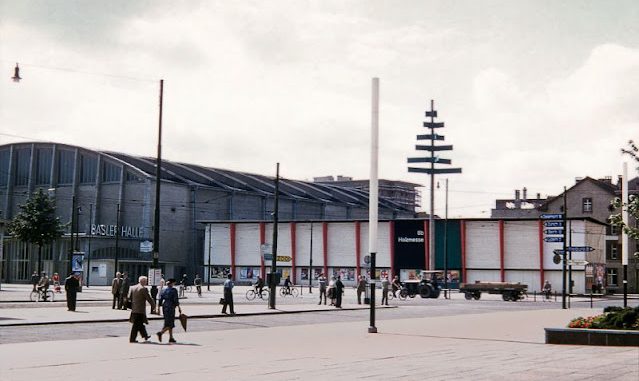
These beautiful color photos were taken by gbfernie5 that show what Switzerland looked like in the 1950s.
 |
| Basel. Basler Halle (Today this is the location of the Congress Center, Basel), Switzerland, early 1950s |
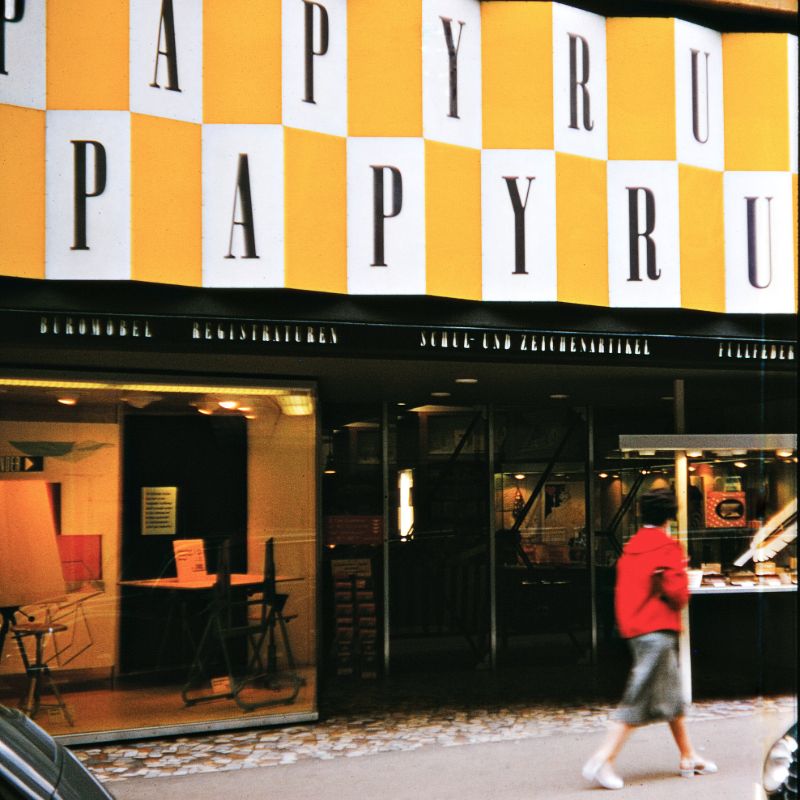 |
| Basel. Papyrus Shop, Freie Strasse 43 4001, Switzerland, 1956 |
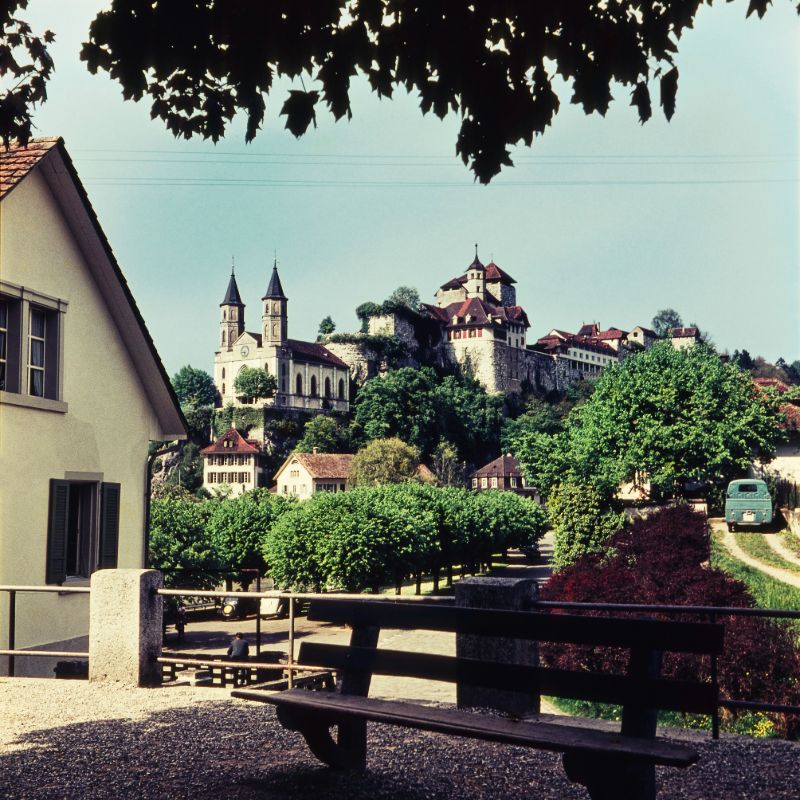 |
| Aarburg. Aarburg Reformed Church and Fortress Aarburg viewed from the corner of Färbeweg and Landhausstrasse, Switzerland, 1950s |
 |
| Appenzell. North Easterly view of Hauptgasse from the corner of Hirschengasse & Hauptgasse, Switzerland, 1950s |
 |
| Bern. Corner of Postgasse and Postgasshalde, Switzerland, 1950s |
Leave a Reply