
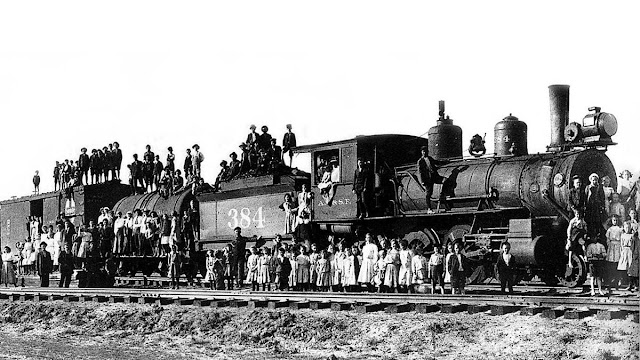
The Orphan Train Movement was a massive social experiment operating in the United States between 1854 and 1929. It relocated an estimated 250,000 orphaned, abandoned, or homeless children from overcrowded Eastern cities, primarily New York, to farming families across the rural Midwest and West.
By the mid-19th century, rapid industrialization, massive waves of European immigration, and high mortality rates from disease created a severe social crisis in Northeastern coastal cities. By 1850, New York City had an estimated 10,000 to 30,000 homeless children roaming the streets. Many sold newspapers, shined shoes, or resorted to petty theft and prostitution to survive. Local orphanages, almshouses, and adult jails were completely inadequate to care for or reform the youth population.
Troubled by the crisis, a Protestant minister named Charles Loring Brace founded the Children’s Aid Society (CAS) in 1853. Brace believed that institutionalizing children was counterproductive and that the solution lay in removing them from the “moral decay” of urban slums. He conceptualized the “emigration plan,” which aimed to solve two societal problems simultaneously: an overwhelming surplus of destitute children in Eastern cities; a severe shortage of labor for expanding farms and ranches in the American West and Midwest. The first official train carrying 46 children departed New York on September 20, 1854, bound for Michigan. Other organizations, most notably the Catholic-run New York Foundling Hospital, soon adopted similar programs.
The logistics of the Orphan Train placements were often informal and highly controversial. Children, ranging in age from toddlers to teenagers, traveled by rail under the supervision of a society agent. Local handbills would advertise the train’s arrival. When it stopped, children were lined up on station platforms or town halls for locals to inspect. Critics frequently compared these viewings to “cattle auctions” or slave markets.
The legal arrangement was typically one of indenture, contracted servitude where families agreed to provide food, clothing, and basic education in exchange for farm labor or domestic work until the child came of age. It was rarely a formal, legal adoption. To expedite placements, the organizations frequently changed children’s names, altered their religious affiliations, and routinely separated siblings, creating massive genealogical dead ends.
Criticisms of the process led directly to modern child welfare reforms, mandatory state licensing for placements, child labor laws, and the development of the contemporary foster care system. The movement phased out during the 1920s as Midwestern states passed legislation restricting out-of-state child imports, and social work shifted toward family preservation and localized foster care.


Leave a Reply