Charles Wilda (1854–1907) was an Austrian painter known for his Orientalist works that captured scenes of daily life, architecture, and culture in the Middle East and North Africa. Born in Vienna, Wilda studied at the Academy of Fine Arts under Leopold Carl Müller, a fellow Austrian Orientalist whose influence strongly shaped his style and choice of subject matter.
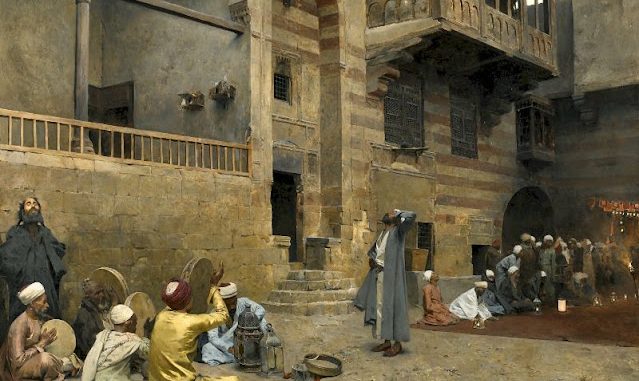
Wilda traveled extensively, particularly to Egypt, where he found much of the inspiration for his paintings. His works often depicted bustling marketplaces, richly detailed interiors, and quiet moments of everyday life, rendered with careful attention to texture, light, and atmosphere. Unlike some of his contemporaries who favored romanticized or purely exotic visions, Wilda’s art showed an interest in naturalism and authenticity, blending documentary qualities with painterly elegance.
Throughout his career, Wilda exhibited at major art exhibitions in Vienna and abroad, earning recognition as one of Austria’s most significant Orientalist painters of the late 19th century. His paintings remain sought after by collectors today and are admired for their vivid color, intricate detail, and ability to transport viewers into faraway settings.
These paintings highlight Wilda’s refined eye for detail and atmosphere, offering vivid glimpses into the daily life and culture of the Middle East and North Africa in the late 19th and early 20th centuries.



Leave a Reply