In the seventeenth-century, Jamaica’s tropical climate, along with the transe-Atlantic slave trade, made Jamaica into the world’s largest sugar producer. Throughout the eighteenth and early nineteenth centuries, Jamaica remained the world’s largest sugar exporter.
Both the United States and Continental Europe depended heavily on the British Colonial, and therefore the Jamaican, export of sugar. Furthermore the Jamaican sugar trade expanded as a result of the Napoleonic Wars. Only during the American revolution did the Jamaican’s experience a drop in capital, due to the war time ban on trade with America.
Prosperity for the British colony was not to last though, and by March 1815, Jamaica saw the peak of its sugar industry. British domination over the world sugar market lasted until the 1830s, when slavery was abolished, and Cuba over took its neighbor in sugar production.
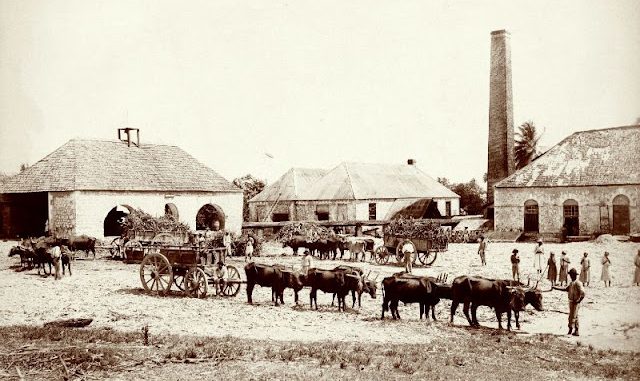
These amazing photos from The Caribbean Photo Archive captured sugar production in Jamaica from the late 19th and early 20th centuries.
Llandovery Sugar Estate, St. Ann, Jamaica, circa 1890
Ploughing The Cane Field at Orange Valley Estate, St Ann, Jamaica, circa 1890
Anchovy Sugar Estate, St James, Jamaica, circa 1890
Sugar Cane Cutters, Jamaica, circa 1890
Taking the Cane Crop at Orange Valley Estate, St Ann, Jamaica, circa 1890



Leave a Reply