Adolfo Hohenstein (1854–1928) was a German-born Italian painter, illustrator, and graphic designer, widely recognized as one of the pioneers of Italian Art Nouveau, or Stile Liberty. Often referred to as the father of Italian poster art, Hohenstein played a key role in shaping the visual language of late 19th and early 20th-century advertising and theatre.
Born in Saint Petersburg, Russia, to German parents, Hohenstein lived in various countries before settling in Italy, where he became most influential. His career flourished in Milan, particularly through his work with the Ricordi publishing house, for which he created numerous posters, theater set designs, and illustrations. His poster work is especially noted for its elegant compositions, flowing lines, and rich decorative elements, drawing on Symbolist and Jugendstil influences.
Some of his most famous works include posters for operas by Giacomo Puccini, such as Tosca and La Bohème, as well as advertisements for products like perfumes and soaps. Hohenstein also mentored other prominent artists, including Leopoldo Metlicovitz and Marcello Dudovich, helping to establish a distinctly Italian style of commercial art that would flourish in the early 20th century.
This collection showcases some of the most iconic posters created by Adolfo Hohenstein between the late 1800s and early 1900s, reflecting his pioneering role in Italian visual culture.
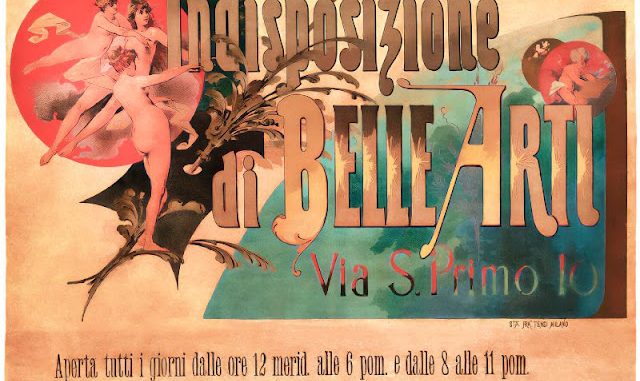
Indisposizione di Belle Arti, 1881
Cesare Urtis e Co. – Torino, Forniture Elettriche, circa 1890s
Distilleria a vapore di liquori Gio. Buton e Co., 1890
Vitalis, Agua Mineral, circa 1890s
Cassa Nazionale Mutua Cooperativa per le Pensioni, 1893



Leave a Reply