
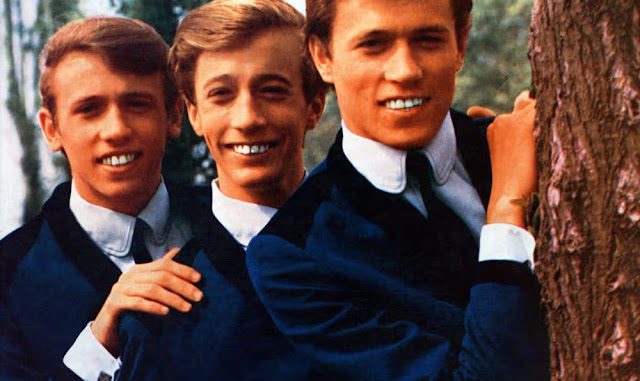
Before they became the falsetto-singing, white-suited kings of the 1970s disco boom, the Bee Gees in the 1960s were a highly successful baroque pop and psychedelic rock band. Driven by the pristine, three-part tight harmonies of brothers Barry, Robin, and Maurice Gibb, they spent the first half of the decade honing their craft as teenagers in Australia before conquering the global charts from London in 1967.
After emigrating from Manchester to Queensland, Australia, as children in 1958, the Gibb brothers began performing at speedways and local television variety shows. They made their first national TV appearance on August 12, 1960, performing “Time is Passing By,” written by a 13-year-old Barry Gibb. Twin brothers Robin and Maurice were just 10 years old.
Heavily influenced by the Beatles and the British beat-music boom, they began recording professionally in 1963. After a string of minor successes, they scored their first massive Australian number-one hit with “Spicks and Specks” in late 1966. Paradoxically, by the time the song topped the charts, the family was already sailing back to England to attempt to launch an international career.
Arriving in London in early 1967, the brothers signed with manager Robert Stigwood. They expanded into a five-piece band by recruiting Australian musicians Vince Melouney (guitar) and Colin Petersen (drums). In April 1967, they released their international debut single, “New York Mining Disaster 1941.” The track was so melodic and heavily harmonized that many radio DJs initially played it believing it was a secret recording by the Beatles, fueling their rapid rise to fame.
Unlike many of their peers, the teenagers wrote all of their own original material. They quickly rolled out a succession of massive global baroque-pop masterpieces such as: “Massachusetts” (1967), “To Love Somebody” (1967) and “I’ve Gotta Get a Message to You” (1968).
By 1969, immense fame took its toll. Rivalries over who should sing lead vocals, primarily between elder brother Barry and Robin, led to Robin briefly quitting the band in 1969 to pursue a solo career, temporarily fracturing the group as the decade drew to a close.


Leave a Reply