
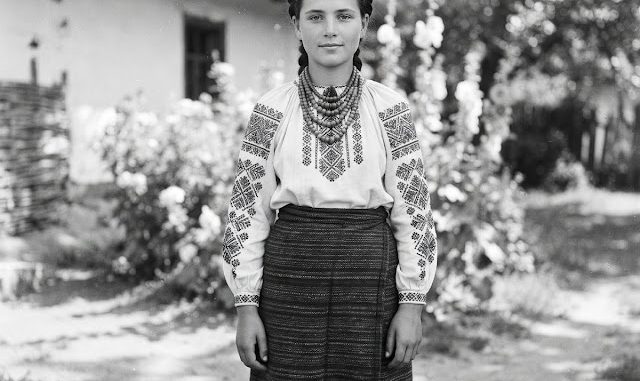
On August 21, 1939, fifteen-year-old Anastasiia Tkachenko stood for a photograph in Merefa, Ukraine, dressed in traditional Ukrainian clothing. She looks composed. Almost serene. But the girl in these photographs had already survived something that had destroyed much of her family.


Six years before these photos were taken, Anastasiia survived the Holodomor (1932–1933), the man-made famine in Soviet Ukraine caused by Stalin-era forced collectivization and grain seizure policies. During the famine, she lost her father, a younger brother, and two sisters to starvation. Anastasiia and her surviving brother, Semen, lived because their mother secured a job at a local orphanage in Merefa, allowing her to keep her remaining children with her and provide them with shelter and food rations.
The famine hit Merefa severely; records from the Holodomor memorial project document roughly 1,200 victims and a mass burial site near the town’s railway station.
The portraits were captured just eleven days before the outbreak of World War II in Europe (September 1, 1939), capturing a fleeting moment of peace before Ukraine was plunged into further devastation. Taken during a period of intense Soviet repression and Russification, her traditional Slobozhanshchyna regional attire acts as a quiet statement of Ukrainian identity. She wears an embroidered shirt (vyshyvanka), a woven wrap skirt (plakhta), layered coral/beaded necklaces (namysto), and a traditional floral wreath (vinok) with flowing ribbons worn by unmarried young women.
Anastasiia survived the war and lived to old age, passing away on April 26, 2018, at the age of 94. The photographs were preserved in her grandson’s family archive before being shared publicly to honor Holodomor survivors.
Leave a Reply