
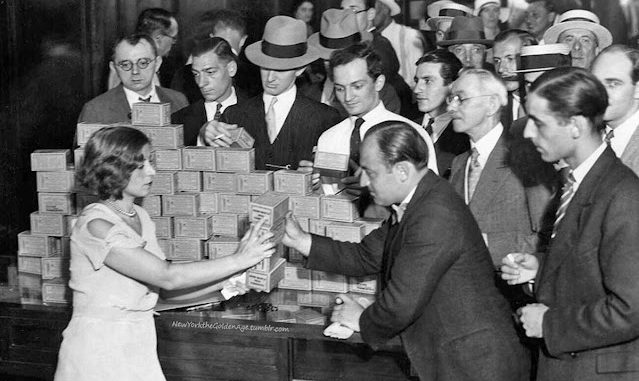
Women selling “wine bricks” (compressed grape juice) in New York in August 1931. The packages were supposed to be dissolved into grape juice, but included the warning, “Do not dissolve the concentrate in a gallon of water, add yeast, and let it sit in a dark place for 21 days, or else it will ferment into wine.”


The “grape bricks” (often branded as Vine-Glo or Vino Sano) were a crucial survival tactic for the wine industry between 1920 and 1933. While selling alcohol was banned, Section 29 allowed households to produce up to 200 gallons of “non-intoxicating” fruit juice annually for personal use.
Vineyards sold dehydrated, concentrated grape bricks (about the size of a pound of butter) that contained pulp, skins, and stems. The packaging was notoriously ironic. It usually included a set of instructions listing what not to do, which acted as a perfect recipe:
- Dissolve the brick in a gallon of water (often with added sugar).
- Do not leave the mixture in a jug in a cool cupboard (or dark place) for about 21 days, or it would turn into wine.
- Do not shake it daily, stop the bottle with a special cork/siphon, or skip preservatives like benzoate of soda (which was recommended to prevent fermentation if you truly wanted only juice).
These negative instructions effectively told buyers exactly how to ferment a roughly 13% ABV wine. Salespeople (sometimes attractive women demonstrating in stores) delivered the warnings with knowing smiles. Packages also stressed that the product was “for home use only” and “legal in your home.”


Prohibition threatened California’s wine industry, as many growers faced pressure to rip out vines. Instead, demand for grapes and concentrates soared. Prices for a ton of grapes jumped from about $9.50 pre-Prohibition to a peak of $375 by 1924. Vineyard land values also rose sharply. Companies and families that stayed in the grape business (including some that later became major post-Prohibition wineries, and figures connected to the Mondavi and Gallo families) prospered. Home wine production helped overall U.S. wine consumption rise in the early Prohibition years even as commercial winemaking was banned.
Sacramental wine for churches and synagogues was another major legal outlet that helped some producers survive.
Authorities periodically targeted the trade. In 1931, dry agents (prompted in part by the Anti-Saloon League) raided a Vino Sano sales office in New York, seized thousands of bricks, and arrested staff, setting up potential court tests of Section 29. Fruit Industries Ltd. faced similar scrutiny and legal challenges around Vine-Glo. The products largely faded with the approach of repeal.
Beer and low-alcohol wine became legal again in early 1933 under the Cullen-Harrison Act; full repeal of the 18th Amendment followed with the 21st Amendment in December 1933.
Leave a Reply