
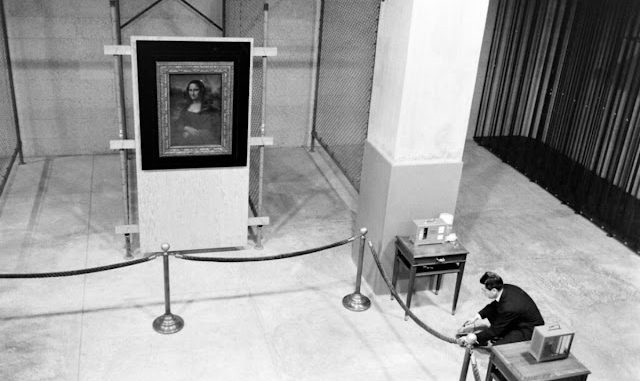
On January 8, 1963, the Mona Lisa went on display in the United States for the first time, on loan from France. The historic 1963 tour was the result of some high-level diplomacy and a personal request from First Lady Jacqueline Kennedy to the French Minister of Cultural Affairs, André Malraux. Despite intense protests from French art experts who feared the painting would be damaged during transit, it safely crossed the Atlantic ocean aboard the ocean liner SS France, traveling in its own first-class cabin under tight security.
The tour debuted at the National Gallery of Art (Washington, D.C.) on January 8, 1963, with an opening ceremony attended by President John F. Kennedy, the First Lady, and over 2,000 dignitaries. It opened to the public the following day, drawing over 500,000 visitors until February 3. The masterpiece moved to Manhattan, where it went on display at the Metropolitan Museum of Art from February 7 to March 4, drawing an additional one million visitors.
During the museum exhibitions, the artwork remained behind bulletproof glass and was guarded 24/7 by U.S. Secret Service agents, local police detectives, and museum security guards.
To handle the unprecedented crowds, both museums had to extend their viewing hours, and visitors were only permitted to look at the painting for a matter of seconds as the line kept moving. It remains one of the most successful and tightly guarded single-painting exhibitions in American history.


Leave a Reply