In September of 1918, a global flu pandemic made entry into California. The first cases were detected among travelers — a man who had returned to San Francisco from a trip to Chicago and seamen aboard a vessel that arrived to the harbor in Los Angeles.
What happened over the fall and winter will sound familiar. City officials imposed “stay at home” orders and forced the closure of schools and places of “public amusement.” Court proceedings and church services moved outdoors. Tents, hotels, and large halls served as makeshift hospitals. Panic was everywhere.
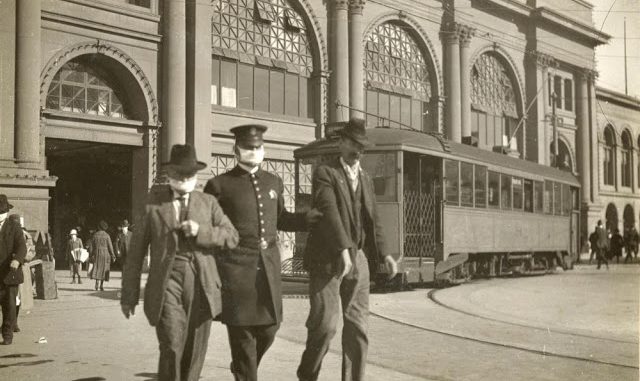
A police officer escorts two men by their arms, one without a mask, near the Ferry Building in downtown San Francisco. The photo’s original caption suggests the men were being taken to jail: “Here we go right down to the Bastile.” (California State Library)
A policeman takes in a citizen for not wearing his flu mask properly in San Francisco in 1918. (California State Library)
A San Francisco police officer wearing a mask warns a man to put on a mask as well in 1918. The original caption accompanying included this line: “Say! Young Fellow Get a mask or go to jail.” (California State Library)
A policeman gives a woman a warning for not wearing a mask during the Spanish flu pandemic in San Francisco in 1918. (California State Library)
A policeman adjusts a citizen’s flu mask in San Francisco in 1918. (California State Library)
As the death toll climbed, measures became more severe, with forced quarantines and mandatory mask ordinances. The masks recommended during the 1918 pandemic were made of heavy-duty six-ply cotton gauze. They were thick and no particular joy to wear. People who refused to wear them or couldn’t be bothered were called “mask slackers” or “mask scoffers.” During World War I, the term slacker described people who neglected their patriotic duty, almost as bad as being a draft dodger.



Leave a Reply