This
post was originally published on
this site
Nicaragua is the largest country in the Central American isthmus, bordered by Honduras to the northwest, the Caribbean to the east, Costa Rica to the south, and the Pacific Ocean to the southwest. Managua is the country’s capital and largest city and is also the third-largest city in Central America, behind Tegucigalpa and Guatemala City.
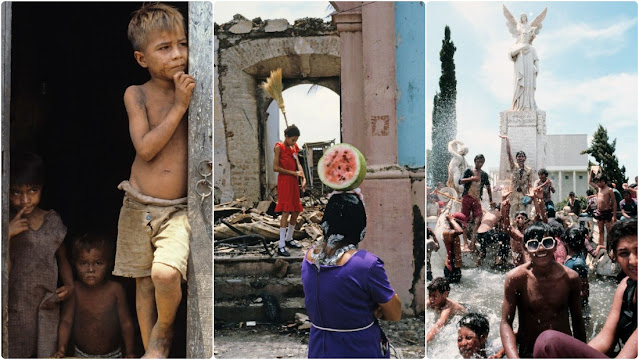 |
| Nicaragua in the 1970s |
The multi-ethnic population includes people of indigenous, European, African, and Asian heritage. The main language is Spanish. Indigenous tribes on the Mosquito Coast speak their own languages and English.
Since Nicaragua gained independence from Spain in 1821, the country has undergone periods of political unrest, dictatorship, occupation and fiscal crisis, including the Nicaraguan Revolution of the 1960s and 1970s and the Contra War of the 1980s.
The mixture of cultural traditions has generated substantial diversity in folklore, cuisine, music, and literature, particularly the latter. Known as the “land of lakes and volcanoes”, Nicaragua is also home to the Bosawás Biosphere Reserve, the second-largest rainforest of the Americas. The biological diversity, warm tropical climate and active volcanoes make Nicaragua an increasingly popular tourist destination.
Chilean photographer
Marcelo Montecino took these amazing photos that documented life of Nicaragua in the 1970s.
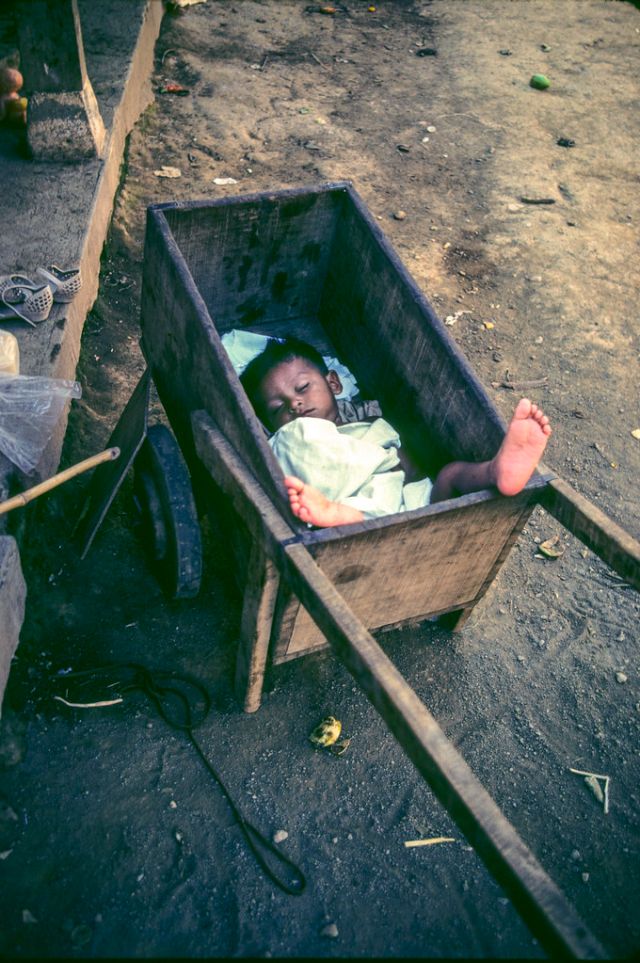 |
| Child, Masaya, Nicaragua, circa 1970s |
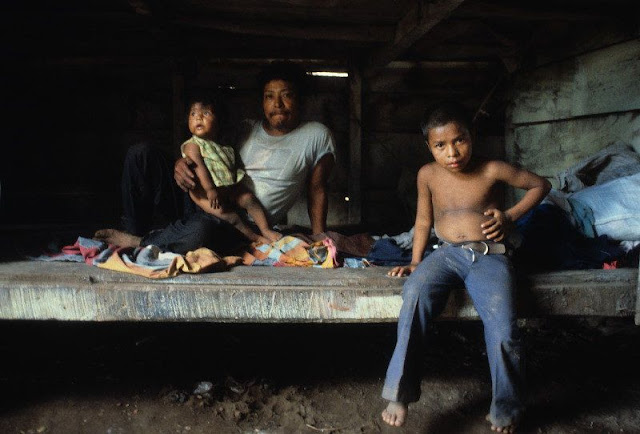 |
| Chinandega, Nicaragua, circa 1970s |
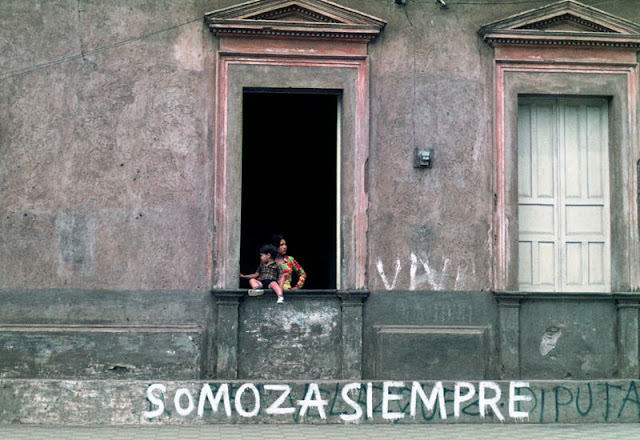 |
| Somoza Forever, Leon, Nicaragua, 1974 |
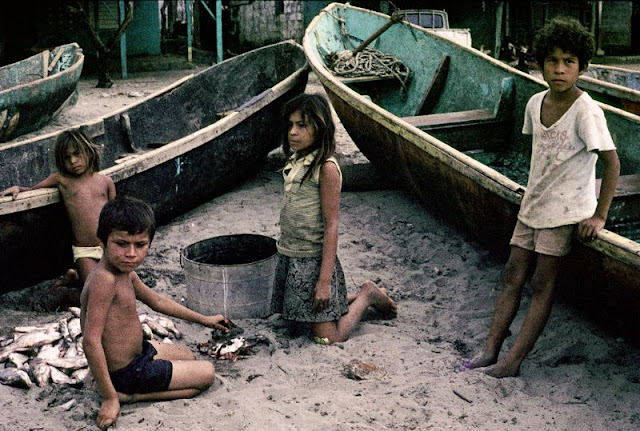 |
| Children of the sea, Nicaragua, 1975 |
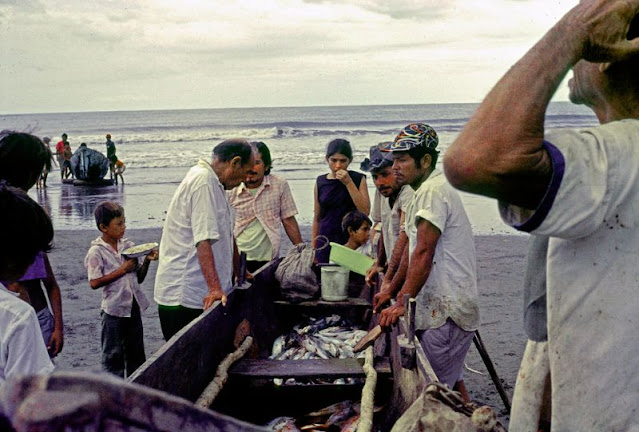 |
| Fishermen, Poneloya, Nicaragua, 1975 |
See more »

Leave a Reply