Alfred Eisenstaedt (1898–1995), the man behind some of the most memorable pictures of the 20th century, was a professional photographer for almost 70 years. He started working in photography in Weimar Germany in the 1920s. Having fled Nazi Germany in the mid-’30s, he shot for LIFE magazine from its debut in 1936 until it ceased publishing as a weekly in 1972. After LIFE was shuttered, Eisenstaedt kept photographing until the mid-1990s.
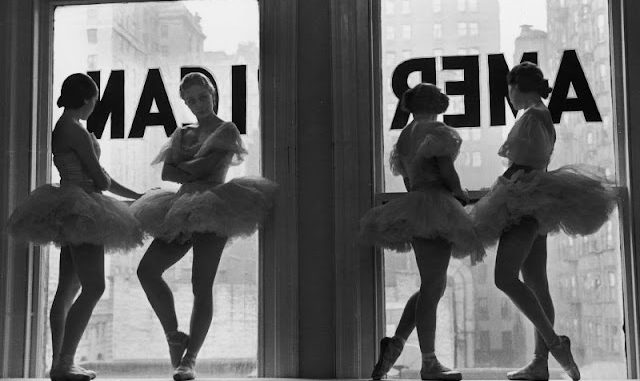
Ballerinas in a rehearsal room at George Balanchine’s School of American Ballet, 1936.
For Eisenstaedt, the thing that was always there, within him, prompting and pointing the way, was his undying curiosity, which was tethered to his photographer’s eye: “I see pictures all the time. I could stay for hours and watch a raindrop.”
V-J Day, Times Square, New York City, 1945.
“Eisenstaedt never lost his childlike interest in things and people, in what made them what they were,” Robert Andreas wrote in the 2004 book, The Great LIFE Photographers. “He would put his subjects at ease, then get up close and take a few pictures—he didn’t need roll after roll—then it was on to the next person, the next happening, tirelessly pursuing the heart of the matter that he saw so easily and wanted very much for us to see too.”
American School of Ballet, New York, 1936.
Ballerinas at George Balanchine’s American School of Ballet gathered around accompanist during rehearsal, 1936.
Pilgrim State Hospital, Long Island, New York, 1936.



Leave a Reply