
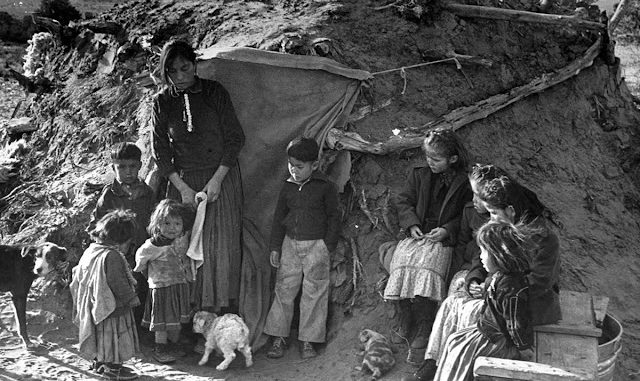
In 1948, LIFE magazine photographer Leonard McCombe spent weeks documenting the daily lives, struggles, and resilience of the Diné (Navajo) people. Published during a period of severe winter crises and ongoing federal neglect on the reservation, his photo-essay titled “The Navajo” became a landmark piece of mid-century photojournalism.
McCombe’s approach focused intensely on individual human stories rather than detached landscapes, using intimate, unposed black-and-white compositions inside traditional hogans and across the high desert.
The late 1940s were an incredibly challenging time for the Navajo Nation. The combination of a devastating winter blizzard in 1947–1948, strict federal livestock reduction policies that decimated the local sheep-herding economy, and a lack of basic infrastructure left many families facing starvation and disease.
McCombe’s assignment was intended to put a human face on these systemic hardships. Rather than relying on sensationalism, his photographs captured a profound sense of dignity, community, and cultural endurance amidst poverty. Many of his most powerful frames were shot inside the low-light environments of log-and-earth hogans. He frequently used the soft, directional light coming from a central smoke hole or doorway to illuminate his subjects, highlighting textures of woven blankets, silver jewelry, and weather-worn hands. His photographs heavily featured the relationships between generations—elders holding traditional knowledge, mothers managing households under immense pressure, and young children navigating a changing world.
When LIFE published the essay on July 1, 1948, the public response was immediate. The intimate imagery shocked readers across the United States, prompting an influx of private donations, food drives, and increased political pressure that eventually contributed to the passage of the Navajo-Hopi Rehabilitation Act of 1950.
McCombe’s work remains a significant historical record of the era, illustrating both a difficult chapter in twentieth-century Native American history and the enduring strength of the Diné people.
 |
| A Navajo family living on a reservation. |
 |
| The game of marbles, was explained by the boy at center to his brother and sister. This boy, who went to school, learned the game there. |
 |
| A Navajo woman smoked a hand-rolled cigarette. |
 |
| A Navajo young man. |
 |
| This Navajo woman sported Navajo-crafted silver shirt collar caps, beaded earrings, and a beaded necklace complete with silver quarters and 50 cent pieces strung together like a tie. |
Leave a Reply