
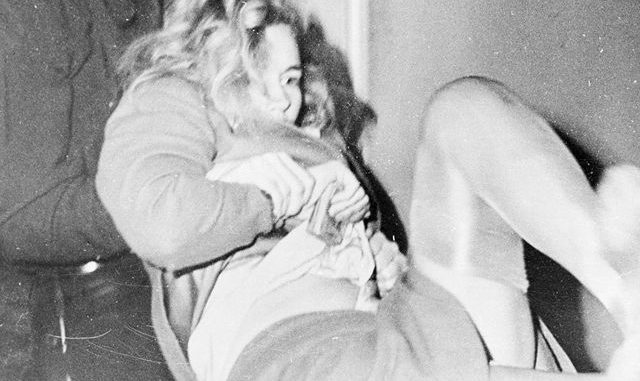
In January 1943, Hollywood actress Frances Farmer was violently arrested at the Knickerbocker Hotel in Los Angeles for violating her probation. The arrest spiraled into a highly publicized media circus due to her aggressive resistance, which ultimately led to her being involuntarily committed to a psychiatric institution rather than serving jail time.

In October 1942, Farmer was stopped for driving with her headlights on during a wartime blackout. Drunk and uncooperative, she reportedly told the officer, “You bore me.” She was fined $500, given a suspended jail sentence, and put on probation with strict orders not to drink.
By early 1943, her behavior had become increasingly erratic. On a movie set, she got into a physical altercation and allegedly slapped or hit a studio hairdresser. When authorities looked into the assault, they discovered that Farmer had failed to pay the remaining balance of her $500 drunk-driving fine from the previous year. Because she had also violated her sobriety order, a judge issued a warrant for her arrest on January 6, 1943.
On January 14, 1943, police tracked Farmer down to her room at the Knickerbocker Hotel. Officers found her drunk and sleeping naked. She fiercely resisted arrest, refusing to dress and forcing officers to wrap her in a blanket and physically drag her out of the hotel kicking and screaming.
Her hearing the following day became legendary. She famously mocked the judge and threw an inkwell at him. When asked about her drinking, she defended herself by shouting, “Listen, I get liquor in my milk, I get liquor in my coffee and in my orange juice, what do you expect me to do, starve to death?”
The judge sentenced her to 180 days in jail. However, due to her highly unstable behavior, her family and a sister-in-law intervened. Instead of serving prison time, she was transferred to a sanitarium in Los Angeles, marking the beginning of her tragic, years-long institutionalization in psychiatric hospitals.


Leave a Reply