
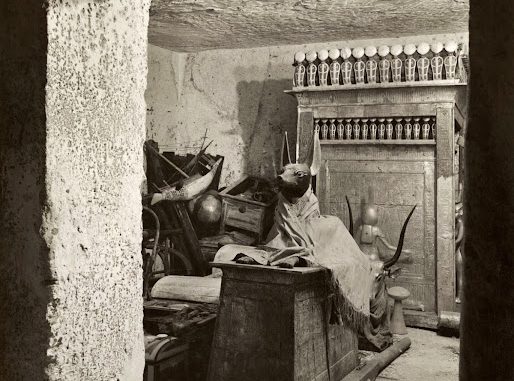
The statue of Anubis, the ancient Egyptian god of mummification and the afterlife, was discovered inside the tomb of King Tutankhamun in 1922 by archaeologist Howard Carter. Dating back over 3,000 years, the figure is a striking representation of Anubis, with the body of a man and the head of a jackal, embodying the god’s role in overseeing the embalming process and guiding souls to the afterlife. The discovery of this statue, along with countless other treasures in the tomb, helped to shine a light on the rich and elaborate funerary practices of ancient Egypt.


At the time of its discovery, the statue was an important find, as it provided an insight into both the religious beliefs of the time and the craftsmanship of ancient Egyptian artisans. Carved from wood and gilded in gold, the statue was not only a religious artifact but also a valuable piece of art that symbolized the divine protection of King Tut in his journey to the afterlife. Its presence in the tomb emphasized the importance of Anubis in the royal burial rituals and the belief in life after death that permeated ancient Egyptian culture.
Today, the statue of Anubis is housed in the Egyptian Museum in Cairo, where it continues to be an iconic piece of ancient Egyptian history. Preserved through careful conservation efforts, it stands as a testament to the skill of the artisans who created it and the fascinating mythology that shaped ancient Egyptian society. Visitors from around the world can still marvel at its detailed craftsmanship and its connection to one of the most famous archaeological discoveries in history, offering a lasting glimpse into the ancient world that continues to capture imaginations today.
Leave a Reply