
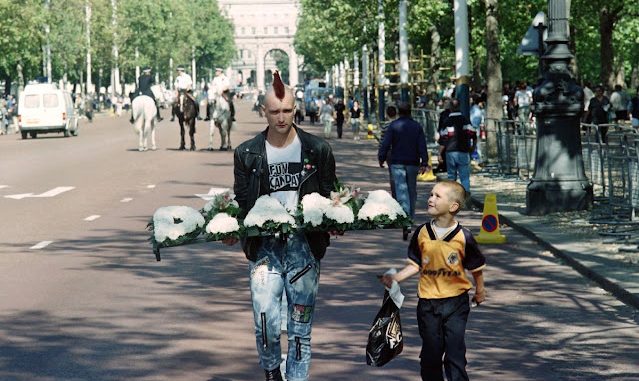
In the late summer of 1997, the death of Diana, Princess of Wales, sent shockwaves through the world, and nowhere was the grief more visceral than outside Buckingham Palace. Mourners gathered by the thousands, laying down a sea of flowers, letters, and candles that carpeted the gates and spilled into the streets. Among the crowd was a figure not everyone expected: a young punk, leather-jacketed and mohawked, standing silently among sobbing pensioners and schoolchildren. The rawness of his expression cut through any stereotype; tears streaked his pierced face as he placed a single red rose at the palace gates.


This unlikely mourner became a symbol of the broad, unifying reach of Diana’s humanity. She had touched people from every walk of life, not just royalty-watchers or charity donors, but also those often overlooked or marginalized. Diana’s advocacy for AIDS patients, her bold stance on landmines, and her evident compassion for the forgotten had resonated with many who typically felt alienated from the pomp of monarchy. For punks and rebels who’d grown up sceptical of the establishment, Diana stood out as someone who’d broken rank and dared to be emotionally honest, publicly flawed, and deeply human.
That day in 1997, the scene outside Buckingham Palace quietly rewrote the narrative of British identity. Grief blurred class lines, fashion statements, and ideologies. The punk wasn’t alone, he was shoulder to shoulder with nannies, war veterans, and tourists, each person bound not by politics but by a shared sense of loss. Diana’s death didn’t just mark the end of a royal chapter, it exposed a deep hunger in the public for authenticity, vulnerability, and connection. And in that moment, even a punk’s silence spoke volumes.
Leave a Reply