
Urban planning projects of San Francisco in the 1950s and 1960s involved widespread destruction and redevelopment of west-side neighborhoods and the construction of new freeways, of which only a series of short segments were built before being halted by citizen-led opposition.
The onset of containerization made San Francisco’s small piers obsolete, and cargo activity moved to the larger Port of Oakland. The city began to lose industrial jobs and turned to tourism as the most important segment of its economy.
The suburbs experienced rapid growth, and San Francisco underwent significant demographic change, as large segments of the white population left the city, supplanted by an increasing wave of immigration from Asia and Latin America. From 1950 to 1980, the city lost over 10 percent of its population.
Over this period, San Francisco became a magnet for America’s counterculture. Beat Generation writers fueled the San Francisco Renaissance and centered on the North Beach neighborhood in the 1950s. Hippies flocked to Haight-Ashbury in the 1960s, reaching a peak with the 1967 Summer of Love.
These amazing color photos were taken by JFCiesla that show street scenes of San Francisco in 1967.
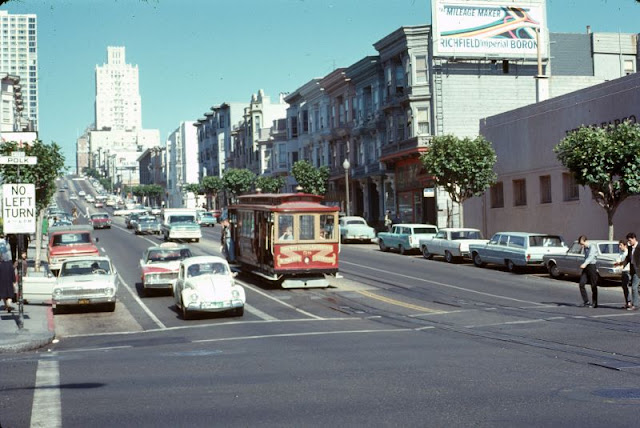 |
| California Street, San Francisco, 1967 |
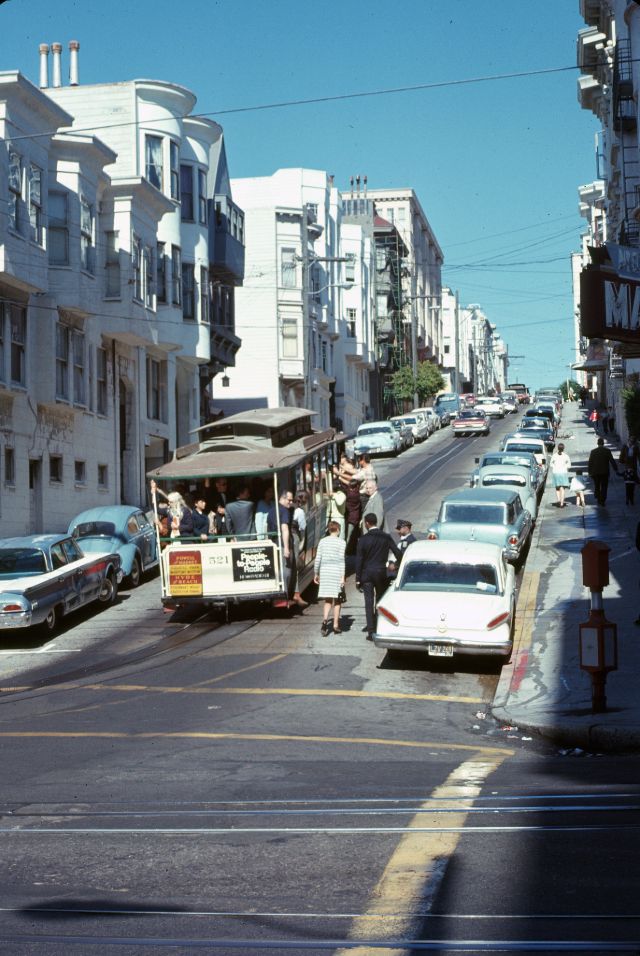 |
| Cable car 521 at Hyde and Washington Streets, San Francisco, 1967 |
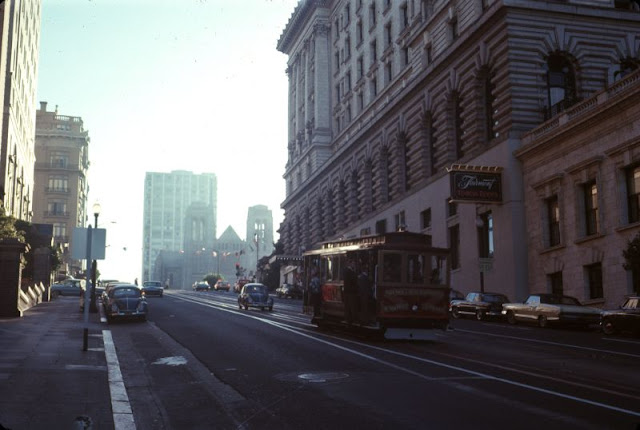 |
| California Street and Powell Fairmont Hotel, San Francisco, 1967 |
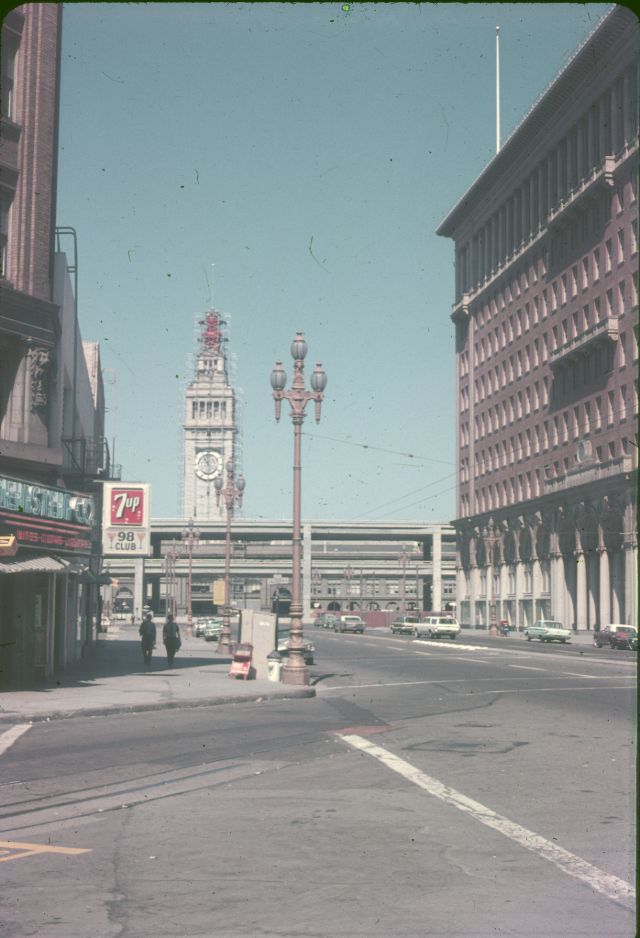 |
| California Street view on Market Street to Ferry Terminal, San Francisco, 1967 |
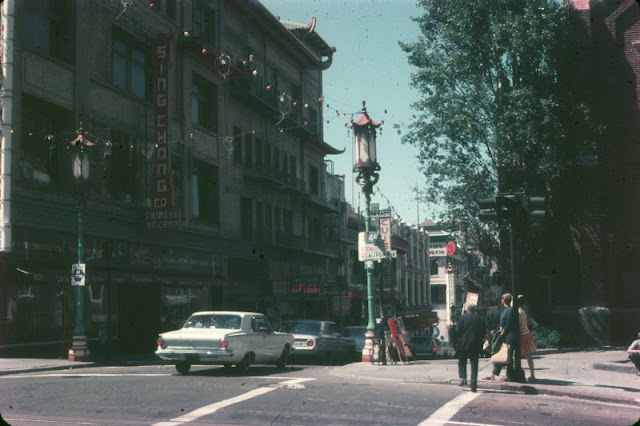 |
| Grant Avenue and California Street, San Francisco, 1967 |
Leave a Reply