At the end of World War II, many Americans began to move out of the cities and into the suburbs. In response to chronic housing shortages, the federal government offered generous home loans to war veterans, and tax benefits for home ownership.
Aggressive building of highway systems and the parallel rise in automobile ownership contributed to the development of communities well beyond urban centers. These and other incentives effectively jump-started the modern era of the single-family suburban home and the suburban revolution.
California was no exception. Between 1950 and 1970, the nation’s suburban population doubled (from 36 million to 74 million residents), with 83 percent of the nation’s growth in the suburbs. California’s abundant land, cheap labor, and mild climate put it in the vanguard of the new housing movement.
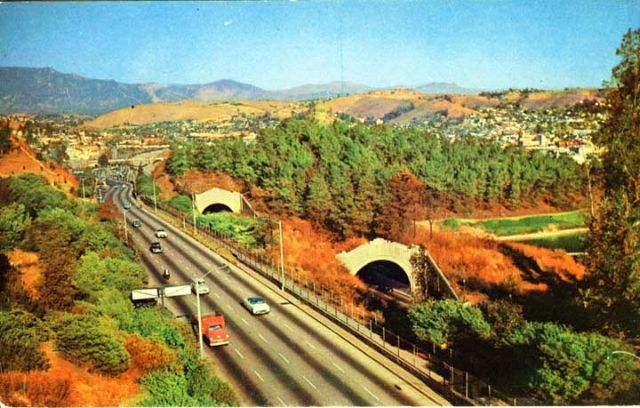
These amazing postcards from Alberta Mayo were taken by Frank J. Thomas that show street scenes of California in the mid-1950s.




Leave a Reply