During the Battle of the Bulge, the Nazis had intended on surrounding the Allies, crushing them, and chasing them out of Europe. However, the Allied Army had other plans.
1 of 55
A heavily-armed Nazi soldier marches into Belgium.
Belgium. Dec. 18, 1944.Wikimedia Commons
2 of 55
American prisoners-of-war from the all-Black 333rd Battalion, photographed by their Nazi captors.
Many of the men captured on this day were stripped of their weapons, walked out into a field, and massacred.
Near Malmedy, Belgium. December, 1944.Wikimedia Commons
3 of 55
Nazi soldiers in the Kampfgruppe Hansen fight against American soldiers.
Liege, Belgium. Dec. 18, 1944.Wikimedia Commons
4 of 55
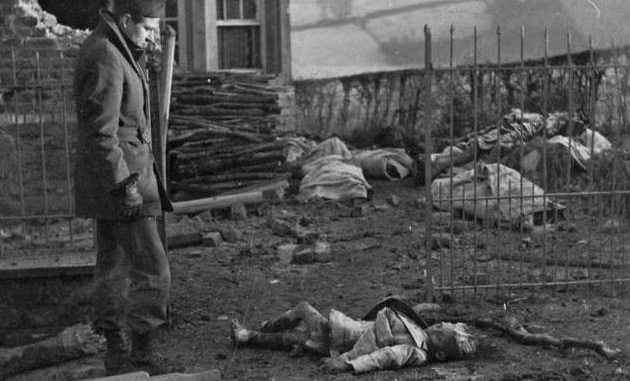
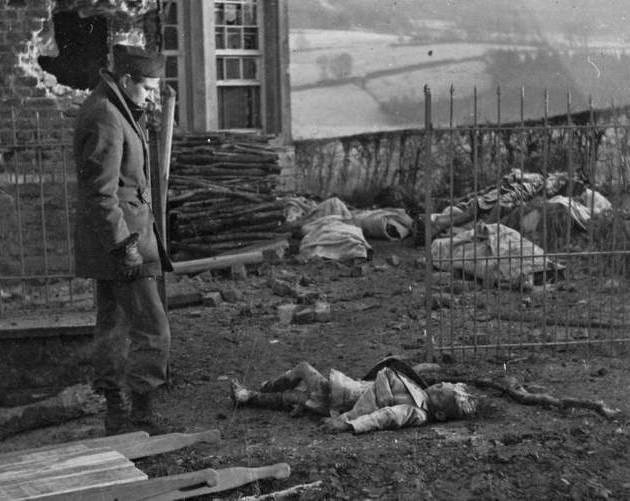
A war correspondent looks down at the dead body of a young Belgian boy, murdered by Nazi soldiers.
American soldiers march toward Wiltz, determined to fight back and reclaim the territory they lost.
Wiltz, Belgium. Circa December, 1944 – January, 1945.National Archives
9 of 55
An American ambulance waits outside of a bombed-out building in Bastogne after an air raid. The soldiers are inside the building, searching for survivors.
American soldiers arrive safely in Bastogne. These men had held off the Germans in Wilts, refusing to give up the ground until their last bullet was expended.
54 Battle Of The Bulge Photos That Capture The Nazis’ Brutal Last Ditch Counteroffensive
View Gallery
On Dec. 16, 1944, the Nazi Army took their last, desperate shot at turning the tide of the western front of World War 2. It was called the Battle of the Bulge – named for the massive, bulging line of more than 400,000 men and 4,000 pieces of artillery that moved on the Allied Army. It was the largest and bloodiest battle that American soldiers would ever fight.
Nearly half-a-million Nazi soldiers pounced on the Allied Army, catching them unaware in a heavy snowstorm. It began with a massive, 90-minute long artillery barrage that blasted the Allied soldiers. After months of victories, the Allies were forced to fall back.
The next few days were full of horrors.
In Malmedy, Belgium, a troop of American soldiers surrendered to the advancing Nazi army. They expected to become prisoners of war – but the men would never see the inside of a cage. SS troops stripped them of their weapons, marched them out into a field, and gunned them down, unarmed and defenseless.
In Stavelot, they massacred civilians. Nazis dragged twenty-three Belgian civilians out of their hiding place, lined them up against the wall, and shot them dead. The people there had just been liberated and thought they were finally safe. Instead, their city was demolished, and women and children alike were dragged out of their homes and killed.
The Nazis soon reached Bastogne, which would become the last bastion of the American army in Belgium. Their chances seemed grim. The city was completely surrounded; they couldn’t get supplies. Food was running scarce, and the people were growing hungry.
The Nazis, sure of their victory, sent a message demanding the surrender of the city. The only reply the men of Bastogne sent back, though, was a single word: “Nuts!”
It became a rallying cry for the men of the U.S. Army and Bastogne became the heart of the battle. General Patton based his whole strategy for the Battle of the Bulge on it. He sent the U.S. Army stampeding through German lines, fighting through dirt and blood to liberate one Belgian city.
The men in Bastogne had to spend Christmas under a hail of artillery and bombs. The gift they’d been waiting for arrived soon enough, though. It was only one day late. On Dec. 26, the Third Army burst through the German lines and reached Bastogne, putting an end to a long and grueling siege.
On that day, the Nazi’s last shot crumbled. They had planned on surrounding the Allied Army and chasing them out of Europe. However, the soldiers in Bastogne and the men who freed them stopped their plan.
More than 100,000 Americans were killed, wounded or captured before the Battle of the Bulge finally came to an end. It was the bloodiest and most brutal battle the nation would see throughout the entire war. Still, the men stood their ground and fought, no matter what came. They stopped what could have been a dark turning point in a horrific war.

Leave a Reply