Some aspects of life in Germany changed immediately upon the outbreak of war on 1 September 1939; others changed more slowly. Germany did not fully mobilize at first. In fact, it was not until 1943 that Germany focussed its economy on war production. Nazi policy was not to burden the people on the home front because they feared domestic unrest; something the Nazis believed had led to Germany’s capitulation in 1918.
Germany during WWII
For most Germans, life during the early stages of the war was reasonably comfortable. Germany was blockaded by Britain so there were some shortages, especially of oil, rare metals, and to some foodstuffs. General building materials had been diverted to war purposes and were also hard to get. But thanks to the Nazi-Soviet Pact, large shipments of raw materials were being sent regularly from the Soviet Union. In addition, Germany ruthlessly plundered the countries it occupied. The Nazis seized military hardware, industrial plant, railway stock, manufactured goods, foodstuffs and livestock.
After the Nazi invasion of the Soviet Union in June 1941, life in Germany started to deteriorate. The supply of raw materials dried up and there would be a delay before arrangements could be made to plunder the Soviet Union on any meaningful scale. The retreating Soviet forces carried out a ruthless policy of scorched earth, destroying anything useful they could not carry away with them.
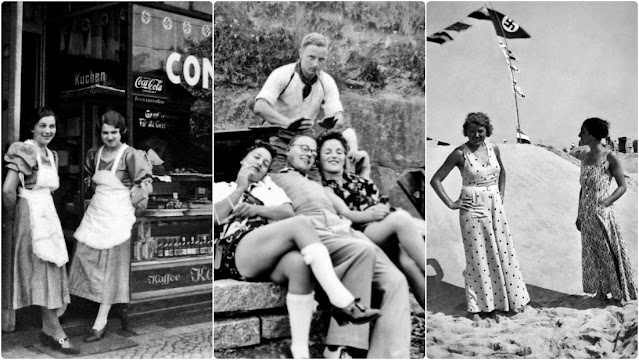
These amazing photos will give you a glimpse of what life of Germany looked like during WWII.
A couple with their car in National Socialist Germany during WWII
A day at the beach in Germany during WWII
A family having fun at the beach in Germany during WWII
A German boy enjoying a day with his model sailboat, circa WWII



Leave a Reply