
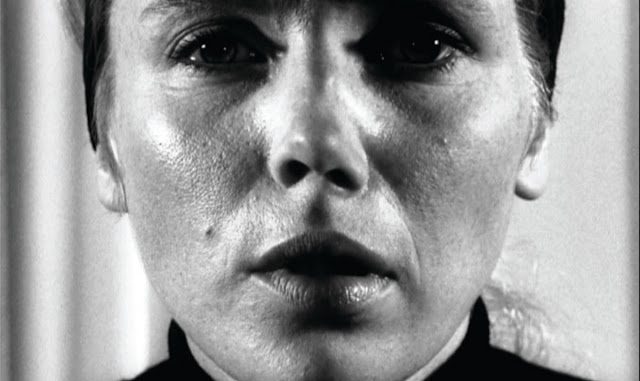
On the set of Persona (1966), Bibi Andersson experienced one of the most demanding, collaborative, and transformative productions of her career. While she was initially hesitant about the psychological exposure of playing Nurse Alma, she actively shaped the script and delivered a career-defining performance alongside co-star Liv Ullmann and director Ingmar Bergman.
Before Persona, Bergman typically cast Andersson as a figure of warmth and innocence in films like The Seventh Seal and Wild Strawberries. This project forced her out of that mold into a far darker, more complex psychological space. Because Andersson and Bergman had a past romantic relationship, she initially felt uneasy about being used as a vessel for his evolving personal fascinations. She also resisted playing the talkative, vulnerable nurse while newcomer Liv Ullmann played the silent, enigmatic actress.
During filming, Bergman considered cutting Alma’s famous erotic monologue about an encounter on a beach because he worried it was too explicit. Andersson insisted they keep it, telling him she could feel it was written by a man and asking for permission to alter words that no woman would actually say. Bergman noted on the Ingmar Bergman Foundation site that Andersson needed to genuinely believe in a scene before she could perform it. He respected this trait as a mark of deep artistic integrity rather than a limitation.
Andersson had actually introduced Ullmann to Bergman on a Stockholm street in 1964, which sparked the idea for the film when Bergman noticed their uncanny physical resemblance. Andersson and Ullmann were already very close friends, which helped ground their intense psychological duel on camera.
Shot largely on the remote Baltic island of Fårö and at Råsunda Studios, the production carried heavy tension. Bergman grappling with intense self-doubt and fearing failure during the 1965 shoot, creating a pressurized environment that fueled the raw, improvisatory energy of the performances.
When first released, Persona was edited because of its controversial subject matter. It received positive reviews at its initial release, with Swedish press outlets coining the word Person(a)kult to describe its enthusiastic admirers. It won Best Film at the 4th Guldbagge Awards, and was Sweden’s entry for the Academy Award for Best Foreign Language Film.


Leave a Reply