Over 16 million animals served in the First World War. They were used for transport, communication and companionship.
In 1914, both sides had large cavalry forces. Horse and camel-mounted troops were used in the desert campaigns throughout the war, but on the Western Front, new weapons like the machine gun made cavalry charges increasingly difficult.
The feline mascot of the light cruiser HMAS Encounter, peering from the muzzle of a 6-inch gun.
However, animals remained a crucial part of the war effort. Horses, donkeys, mules and camels carried food, water, ammunition and medical supplies to men at the front, and dogs and pigeons carried messages. Canaries were used to detect poisonous gas, and cats and dogs were trained to hunt rats in the trenches.
Animals were not only used for work. Dogs, cats, and more unusual animals including monkeys, bears and lions, were kept as pets and mascots to raise morale and provide comfort amidst the hardships of war.
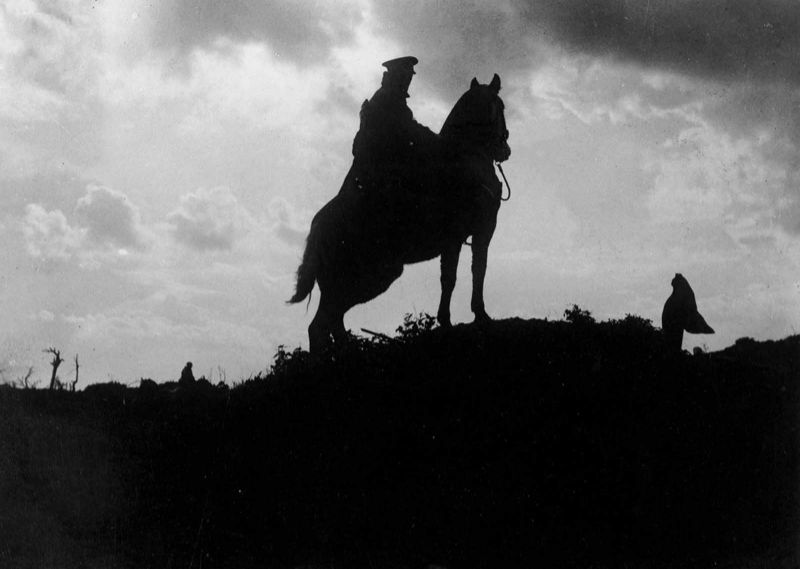
A single soldier on his horse, during a cavalry patrol in World War I.
“These homing pigeons are doing much to save the lives of our boys in France. They act as efficient messengers and dispatch bearers not only from division to division and from the trenches to the rear but also are used by our aviators to report back the results of their observation”.
Bandages retrieved from the kit of a British Dog, ca. 1915.
A dog-handler reads a message brought by a messenger dog, who had just swum across a canal in France, during World War I.




Leave a Reply