
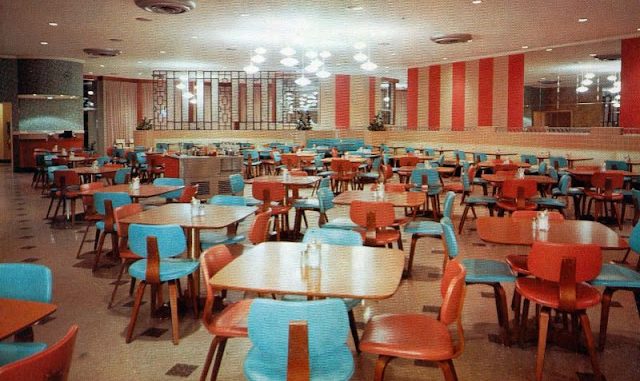
The American cafeteria started in 1885, when a New York self-service restaurant opened, or in 1893, when a Chicago restaurateur named his business a “cafeteria” (actually Spanish for “coffee shop,” though the American version of the term is now in use around the world).
California’s cafeteria explosion began in 1905, when a restaurant boasting self-service advertised itself as “food that can be seen” and “no tips.” The idea was so popular that by the 1920s, some called L.A. “Sunny Cafeteria.”
The Industrial Revolution also spurred the cafeteria’s growth. A new class of workers had emerged who looked down on bringing steel lunch boxes to work. And unlike the saloons that offered free lunches, cafeterias were open to women.
By the 1960s, though, the popularity of McDonald’s and other fast-food restaurants had rendered the stand-alone cafeteria to near obsolescence.
Here below is a set of vintage postcards that shows the inside of American cafeterias in the 1950s and 1960s.
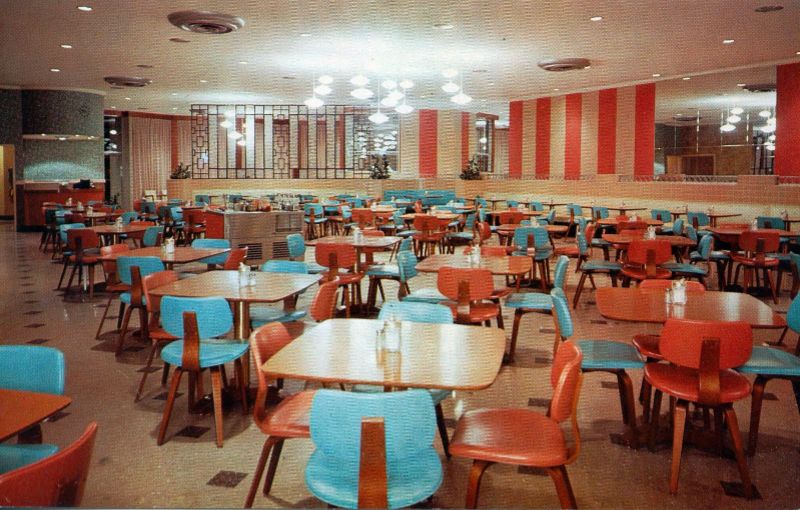 |
| Alabama. Britling on the Highlands Cafeteria at 2173 Highland Avenue, Birmingham |
 |
| Arizona. Ferguson’s Cafeteria at 3030 East Thomas Road, Phoenix |
 |
| Arizona. Holiday House Cafeteria at 1145 N. Alvernon Way, Tucson |
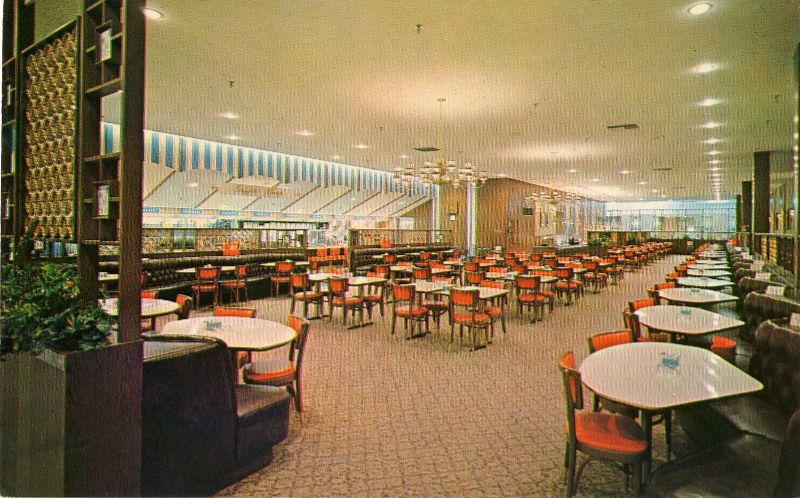 |
| Arizona. Holland House Cafeteria, East Camelback Mall, Phoenix |
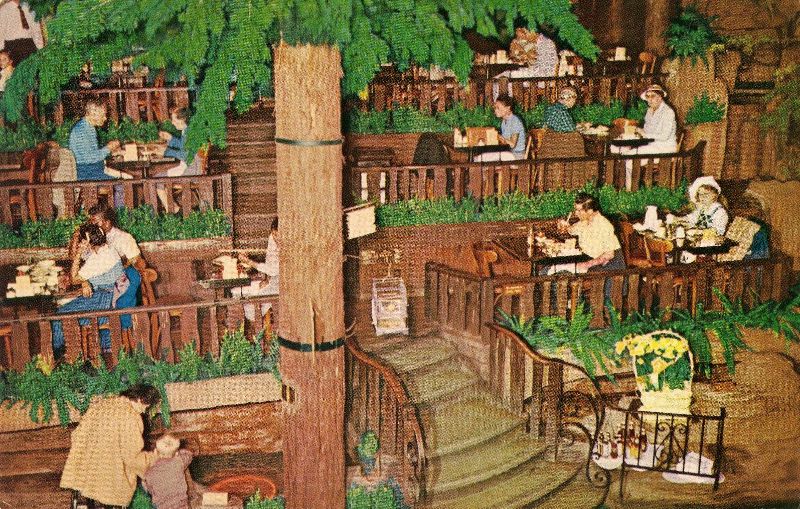 |
| California. Clifton’s Brookdale terraced dining levels, Los Angeles |
Leave a Reply