
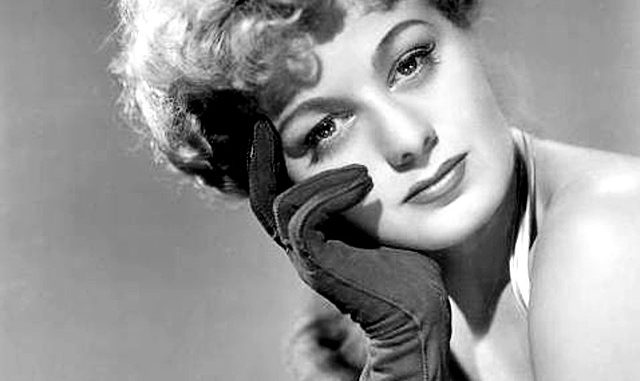
Shelley Winters (born Shirley Schrift; August 18, 1920 – January 14, 2006) was an American actress, whose film career spanned seven decades. In the 1950s, Winters underwent a massive career transformation, evolving from a Hollywood “blonde bombshell” into a highly respected, Academy Award-winning dramatic character actress.
At the start of the decade, Winters was under contract with Universal-International Pictures, where she was pushed into highly sexualized, “bombshell” roles. She frequently played femme fatales, barflies, and Western heroines in films like Winchester ’73 (1950) and Frenchie (1950). During this time, she was celebrated as a symbol of mid-century glamour and style.
Disenchanted with being typecast, Winters actively fought for serious roles. Her definitive turning point came in 1951. In George Stevens’ A Place in the Sun (1951), she deliberately shed her glam image to play Alice Tripp, a desperate, plain factory worker. The performance earned her an Academy Award nomination for Best Actress and redefined her trajectory. She delivered iconic performances in Charles Laughton’s cult noir thriller The Night of the Hunter (1955) as Willa Harper and in Robert Aldrich’s The Big Knife (1955).
Frustrated by Hollywood’s continued reliance on shallow roles, Winters temporarily left Los Angeles for New York City in the mid-1950s. She joined the prestigious Actors Studio to study method acting and reestablished her critical reputation on Broadway, starring in the acclaimed, drug-themed play A Hatful of Rain (1955).
Winters capped off the decade with the ultimate validation of her artistic shift. She won her first Academy Award for Best Supporting Actress for her raw portrayal of Mrs. Van Daan in The Diary of Anne Frank (1959).


Leave a Reply