
An American photographer, Berenice Abbott (1898-1991) was a central figure in and important bridge between the photographic circles and cultural hubs of Paris and New York. She was born in Springfield, Ohio, and in 1918 moved to New York, where she studied sculpture independently, meeting and making vital connections with Marcel Duchamp and Man Ray, leaders of the American avant-garde.
In 1921, Abbott moved to Paris and continued her study of sculpture there and, later, in Berlin, before returning to Paris and becoming an assistant at the Man Ray Studio, where she would master photography. Her first solo show was at the gallery Le Sacre du Printemps in Paris in 1926 and featured portraits of the Parisian avant-garde, a practice she continued throughout her years in Paris, as in James Joyce.
It was in 1925 at the Man Ray Studio that Abbott first saw photographs by Eugène Atget. After Atget’s death, in 1927, she collaborated with Julien Levy, of New York’s Julien Levy Gallery, to buy most of Atget’s negatives and prints, bringing them back to New York upon her return in 1929. Abbott’s initiative preserved the archive of this fin-de-siècle French photographer’s studio, which, given its influence on the avant-garde, has become an important chapter of Abbott’s legacy.
Arriving back in New York in 1929, Abbott was struck by the rapid transformation of the built landscape. On the eve of the Great Depression she began a series of documentary photographs of the city that, with the support of the Works Progress Administration Federal Art Project from 1935 to 1939, debuted in 1939 as the traveling exhibition and publication Changing New York. For the rest of her life Abbott advocated for a documentary style of photography as exemplified in this project, while also continuing to promote the work of Atget.
Throughout her career, Abbott’s photography was very much a reflection of the rise in the development of technology and society. Her works documented and extolled the New York landscape. This was guided by her belief that a modern-day invention such as the camera deserved to document the twentieth-century. These photographs were shot by Abbott between 1933 and 1938.
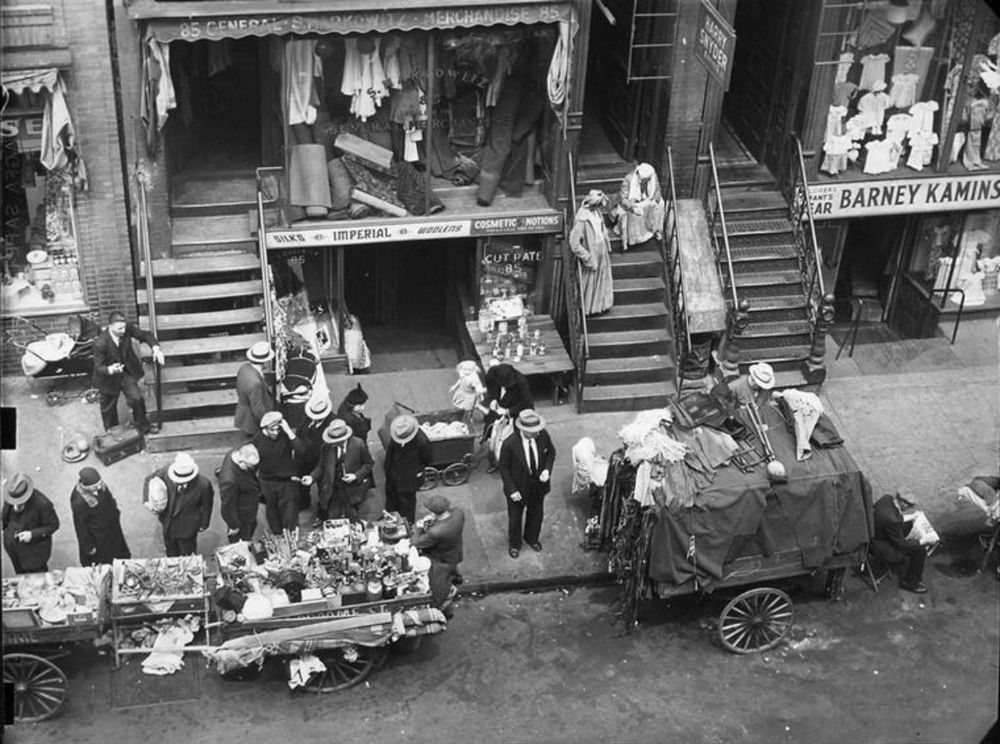 |
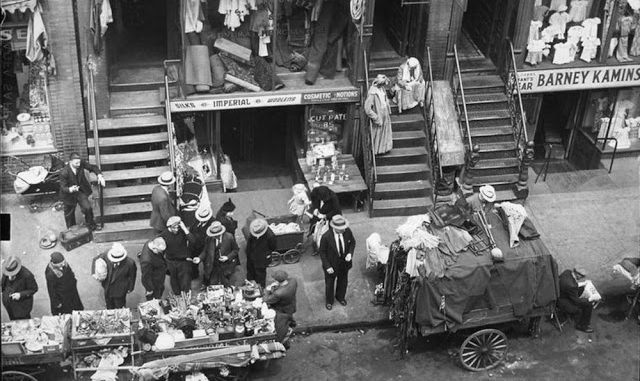
| Hester Street, between Allen and Orchard Streets, Manhattan. Looking down from window on street scene including peddlers, women sitting on stoop, baby carriages, fabric and clothing stores and pedestrians. |
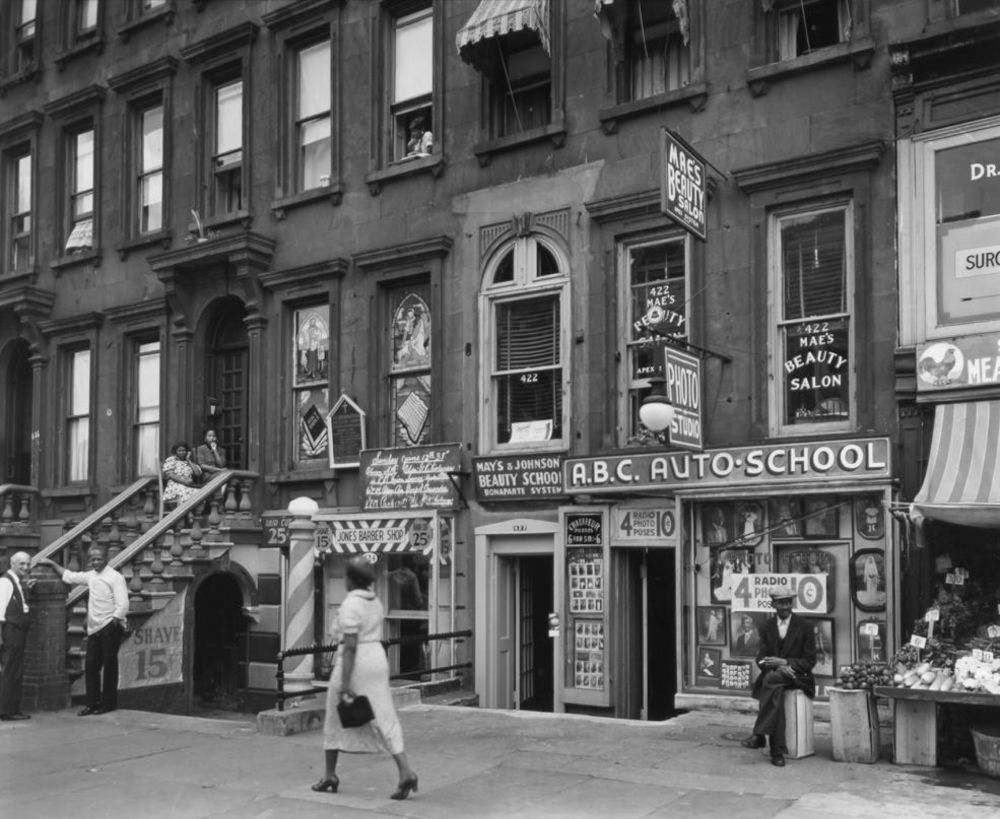 |
| Harlem Street: II. 422-424 Lenox Avenue, Manhattan. Women sit on steps of house that serves as a church, with barber- shop below, white man talks to barber, beauty shop, and auto school next door. |
 |
| Henry Street, Manhattan. Abbot’s expertise in achieving a great depth of field is evident in this shot of a Manhattan street displaying the architectural variety of an evolving urban environment. |
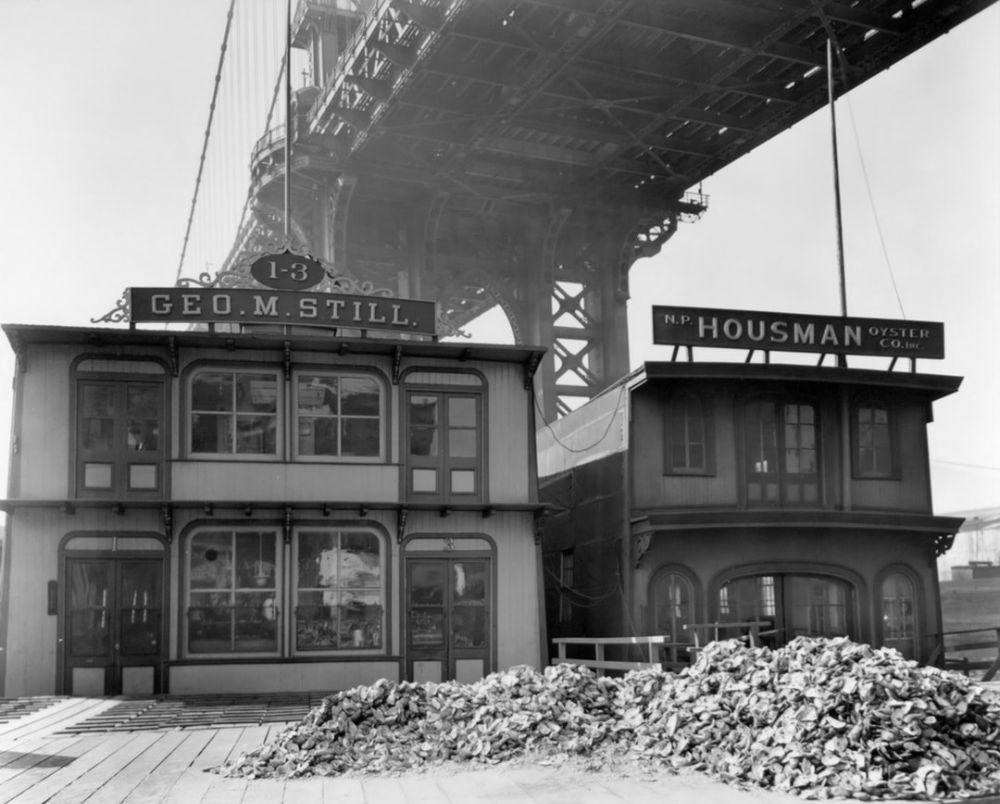 |
| Oyster Houses, South Street and Pike Slip, Manhattan. George M. Still and N.P. Housman Oyster Co.’s with piles of oyster shells in front and the Manhattan Bridge above. |
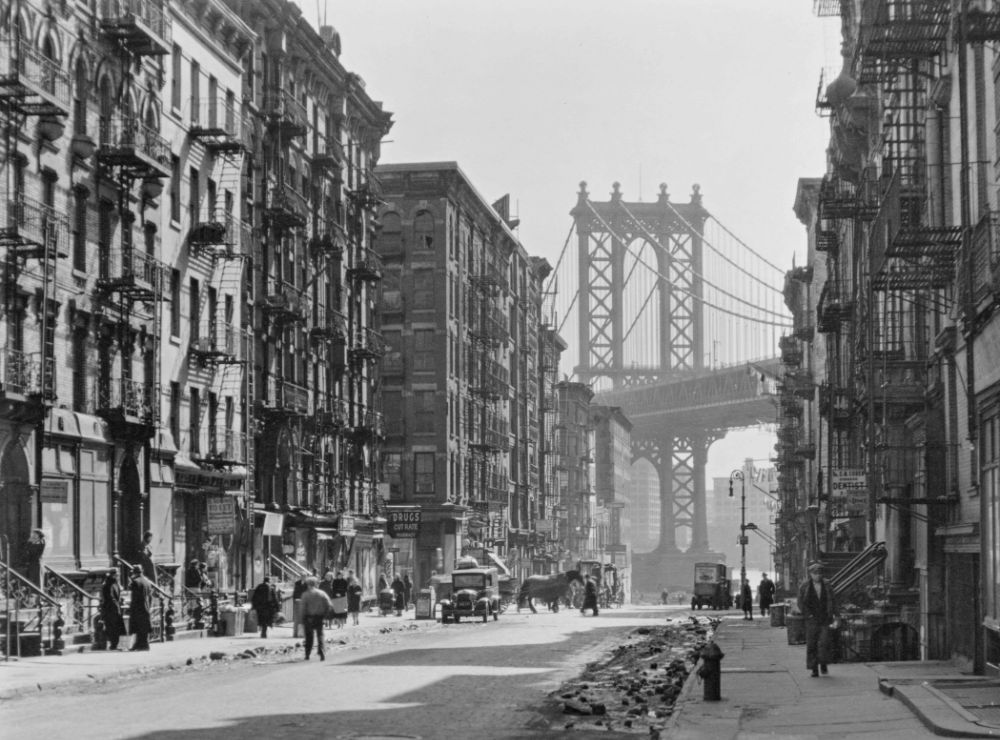 |
| Pike and Henry Streets, Manhattan. Looking down Pike Street toward the Manhattan Bridge, street half in shadow, rubble in gutters, some traffic. |
Leave a Reply