
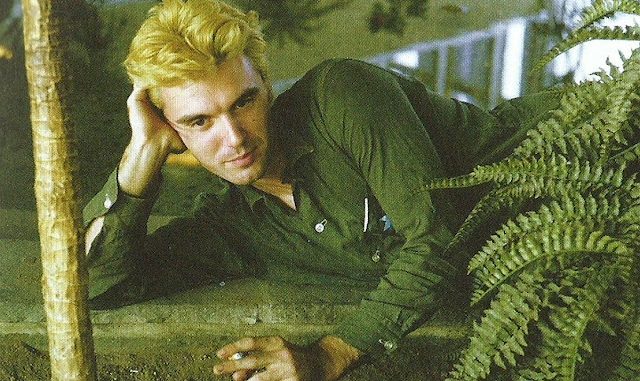
David Byrne in the 1970s was the eccentric, awkward, and brilliant frontman of Talking Heads, emerging as a key figure in New York’s new wave/punk scene. He was in his early-to-mid 20s (born May 14, 1952), fresh out of art school, and helped define a cerebral, anxious, and danceable sound that stood apart from both mainstream rock and raw punk.
Talking Heads formed in 1975 in New York City. Byrne co-founded the band with Chris Frantz (drums) and Tina Weymouth (bass), whom he met at the Rhode Island School of Design (RISD). They started as a trio playing CBGB and other clubs, often opening for acts like the Ramones. Jerry Harrison joined on guitar/keyboards in 1977.
They signed to Sire Records and released their debut Talking Heads: 77 in 1977, featuring the hit “Psycho Killer.” Follow-ups included More Songs About Buildings and Food (1978) and Fear of Music (1979). These albums mixed minimalist post-punk, funk influences, and art-school weirdness.
Rejecting long hair and leather jackets, Byrne wore stiff, preppy polo shirts and slacks. His clean-cut aesthetic intentionally contrasted the gritty punk scene. He was celebrated for his intense, rigid, and erratic physical movements. His twitching and wide-eyed stare mirrored the nervous anxiety embedded in his vocal delivery. Grounded by his art-school roots, he viewed music as a highly visual, conceptual performance piece rather than straightforward entertainment.
Byrne in the 1970s was a personification of the “Art School” sensibility. He was intensely curious about cybernetics, acoustics, and sociology, often treating songwriting like a scientific experiment. He didn’t just sing about love; he sang about the physical sensation of breathing or the layout of a city, establishing himself as one of the most unique and influential creative minds of the decade.
According to interviews with Rolling Stone, Byrne shared that the near-bankruptcy of 1970s New York City provided a unique catalyst for artists. Because the city was struggling, officials turned a blind eye to illegal loft spaces, allowing musicians to live, work, and collaborate for incredibly cheap rent. This low-cost environment directly gave Talking Heads the foothold they needed to experiment and launch their career.


Leave a Reply