In 1938, the Japanese Red Cross worked with government authorities to create a series of posters to teach the public about the new Anti-Aircraft Defense Law, which was enacted in seeming anticipation of air strikes following the outbreak of the Japan-China War (1937–1945).
Among other things, the new law required citizens to take protective measures against gas attacks and prepare for disinfection, evacuation and relief. For the government, one purpose of the posters –– which were created as part of a military exhibition at the Red Cross Museum –– was to instill a pattern of “anti-aircraft defense thought” among the population.
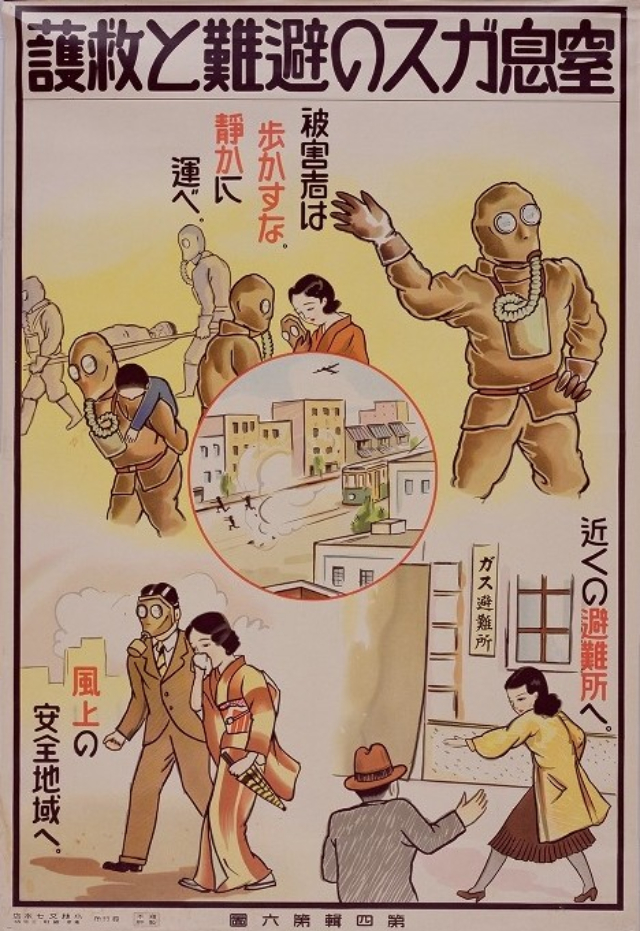
Asphyxiant Gas: Evacuation and Aid
Do not allow victims to walk. Carry them gently.
Head to a nearby shelter.
Move to a safe location upwind.
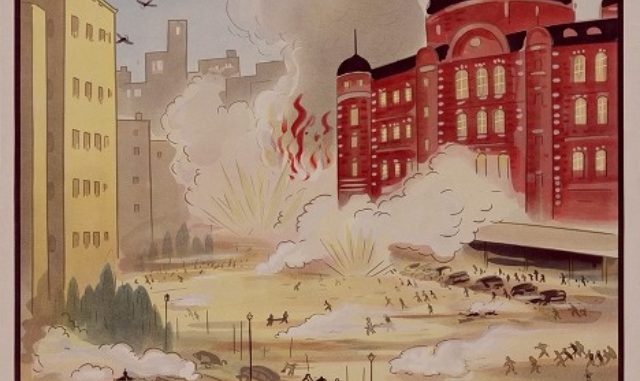
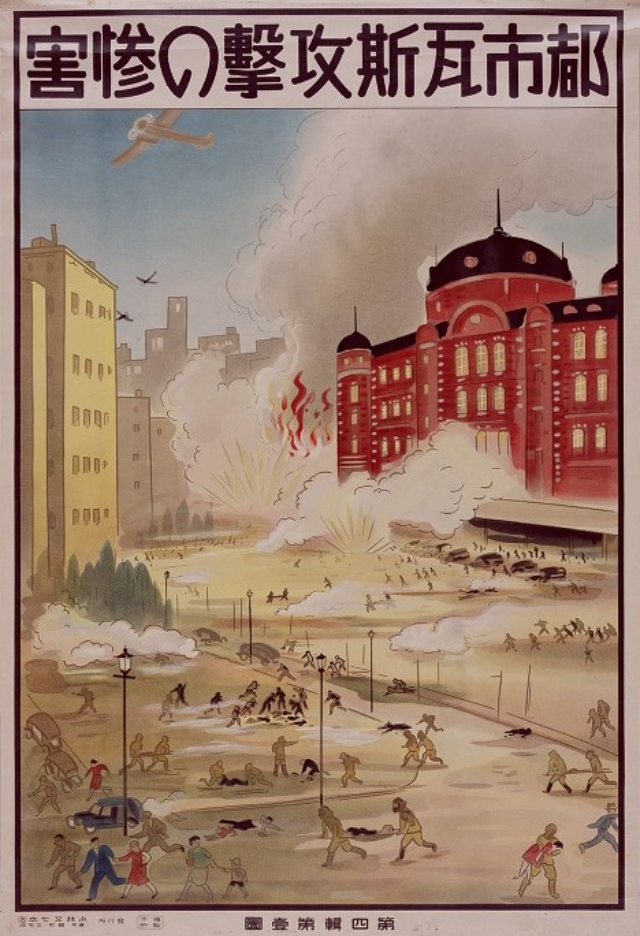
Devastation of Urban Gas Attack
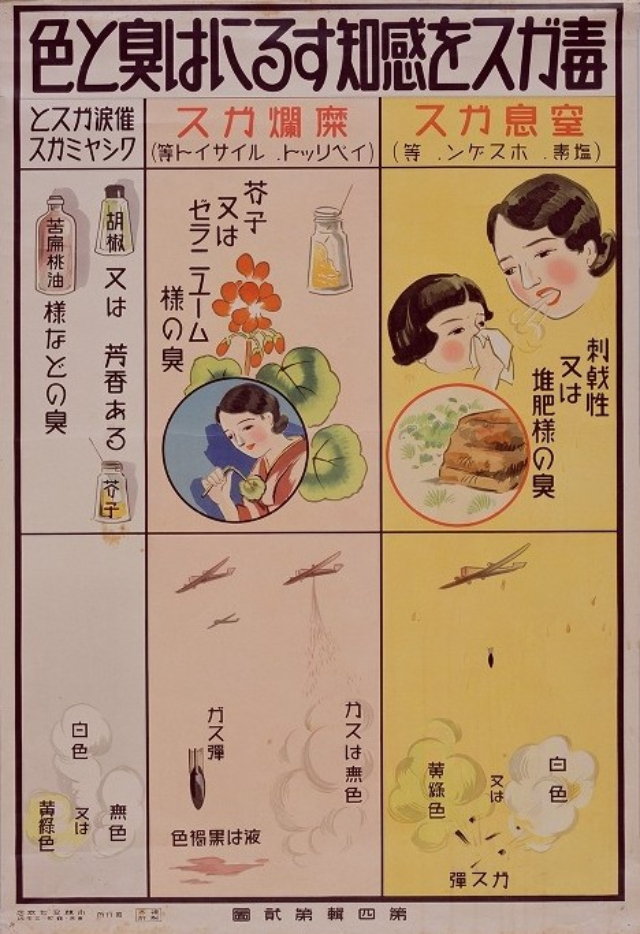
Gas Detection: Smell and Color
– Asphyxiant gas (chlorine, phosgene, etc.): Pungent or hay-like odor. White or yellowish in color.
– Blister gas (yperite/mustard gas, lewisite, etc.): Mustard or geranium-like odor. Colorless in gas form, reddish-brown in liquid form.
– Tear gas and sneezing gas: Odor resembles pepper, spicy mustard or bitter almond oil. White, yellow or colorless.
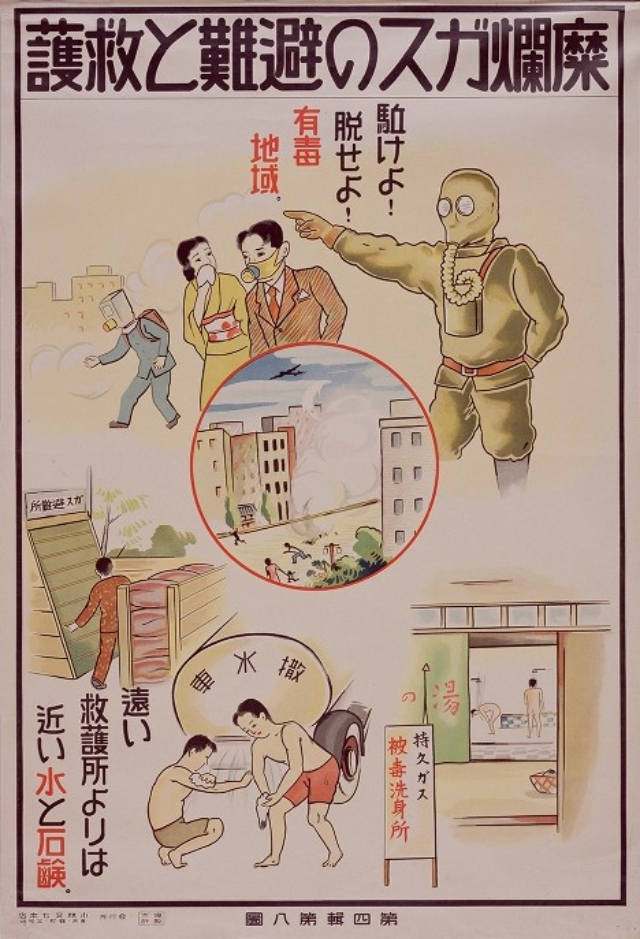
Blister Gas: Evacuation and Aid
Toxic area! Run! Flee!
Better to seek soap and water nearby than to travel to an aid center far away.
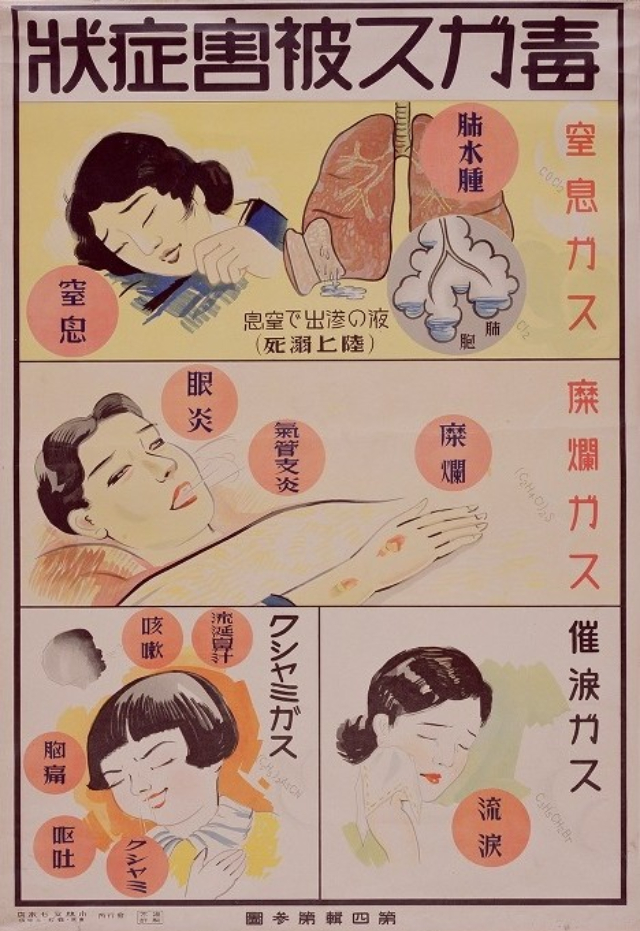
Poison Gas Symptoms
– Asphyxiant gas: Accumulation of fluid in lungs/ Suffocation (dry drowning)
– Blister gas: Blisters/ Respiratory inflammation/ Inflammation of the eyes

Leave a Reply