This
post was originally published on
this site
The 17th century is considered Amsterdam’s Golden Age, during which it became the wealthiest city in the western world. Ships sailed from Amsterdam to the Baltic Sea, North America, and Africa, as well as present-day Indonesia, India, Sri Lanka, and Brazil, forming the basis of a worldwide trading network. Amsterdam’s merchants had the largest share in both the Dutch East India Company and the Dutch West India Company. These companies acquired overseas possessions that later became Dutch colonies.
The end of the 19th century is sometimes called Amsterdam’s second Golden Age. New museums, a railway station, and the Concertgebouw were built; in this same time, the Industrial Revolution reached the city. The Amsterdam–Rhine Canal was dug to give Amsterdam a direct connection to the Rhine, and the North Sea Canal was dug to give the port a shorter connection to the North Sea. Both projects dramatically improved commerce with the rest of Europe and the world.
Here below is a set of amazing Photochrom prints from
Library of Congress that shows street scenes of Amsterdam around 1890.
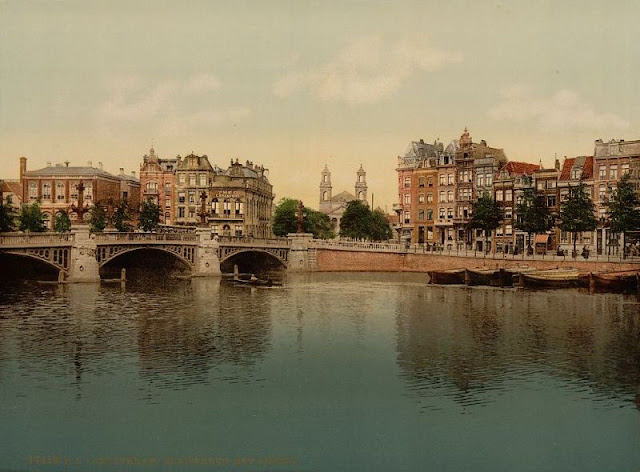 |
| Amsterdam. Blue bridge and the Amstel River, circa 1890 |
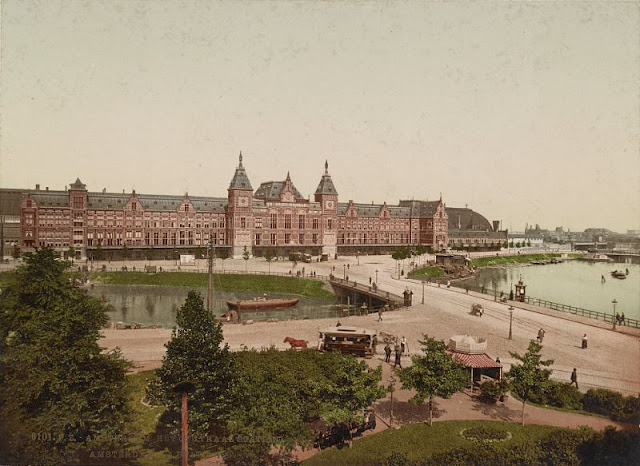 |
| Amsterdam Centraal Station, circa 1890 |
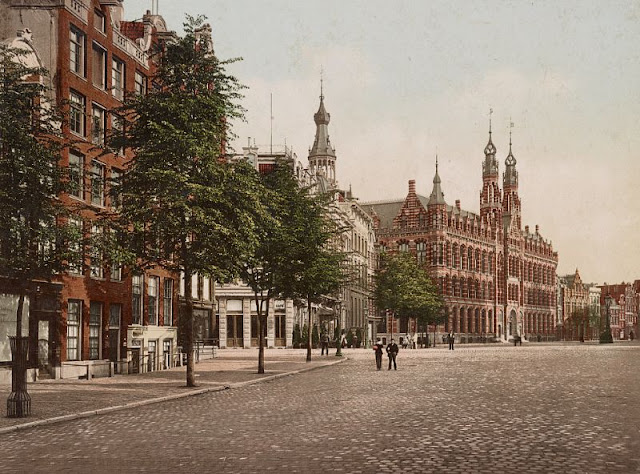 |
| Amsterdam Post Office, circa 1890 |
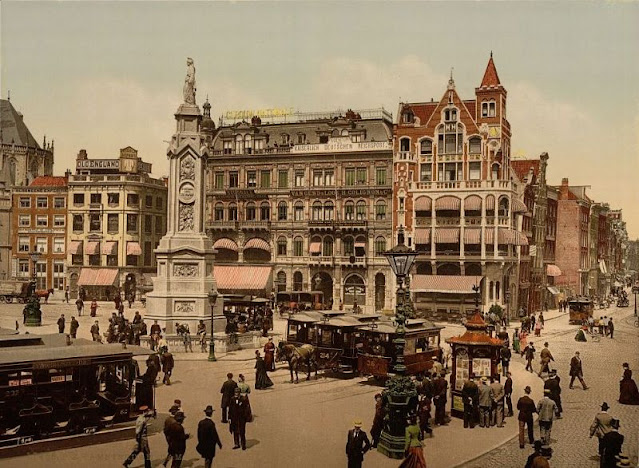 |
| Amsterdam. Dam Square with the Nieuwe Kerk (New Church) on the left, circa 1890 |
 |
| Amsterdam. De Waag or weighing house at right, originally a gate in the city walls and now a subway station, Nieuwmarkt, circa 1890 |
See more »

Leave a Reply