
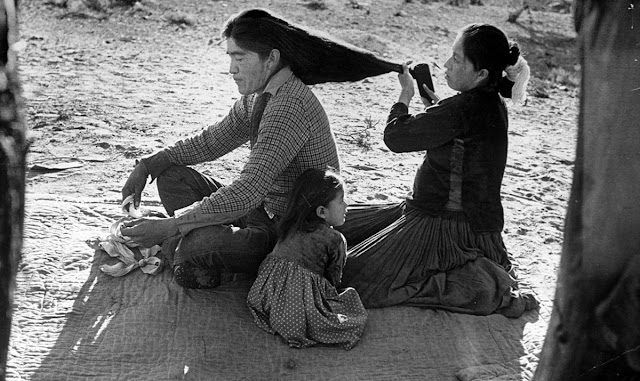
In 1948, photographer Leonard McCombe captured this quiet moment on the Navajo Nation in Arizona: a Diné woman brushing her husband’s long hair while their child sat nearby. The man in the photo is the son of Yellowsalt, a member of an extended family of sheep herders. At the time, McCombe was documenting life for a LIFE Magazine photo essay titled “A Country Within a Country.” The story aimed to show the everyday reality of the Navajo people during a period of significant transition and hardship.

Long hair has held deep cultural importance within Diné (Navajo) tradition for generations, often symbolizing identity, strength, family connection, and harmony. Hair care itself could also carry cultural and spiritual meaning, with grooming rituals passed through families and tied to respect and presentation.
By the mid-20th century, Navajo families were balancing traditional ways of life with the pressures of modernization, government assimilation policies, and economic hardship following decades of displacement and federal control over tribal lands. While this man wore his hair traditionally long, many younger Navajos at the time were beginning to wear their hair short as they integrated more with outside society.
Leave a Reply