The late 19th century introduced the mesmerizing technique of Photochrom, a photolithographic process that transformed black-and-white negatives into richly detailed, colorized images. This innovation offered the Victorian public a vivid, almost fantastical, view of distant lands previously unseen in natural color.
The Photochrom prints of Constantinople (modern-day Istanbul) from the 1890s are particularly striking, showcasing the majesty of the Ottoman capital just before the 20th century. These images meticulously captured iconic landmarks like the Hagia Sophia, the Blue Mosque, and the bustling shores of the Golden Horn, depicting the city’s complex mix of Byzantine and Ottoman architecture, often populated by elegantly dressed figures.
Serving as early forms of picture postcards and travel documentation, these prints preserved a romanticized, colorful record of a culturally rich city at the crossroads of East and West.
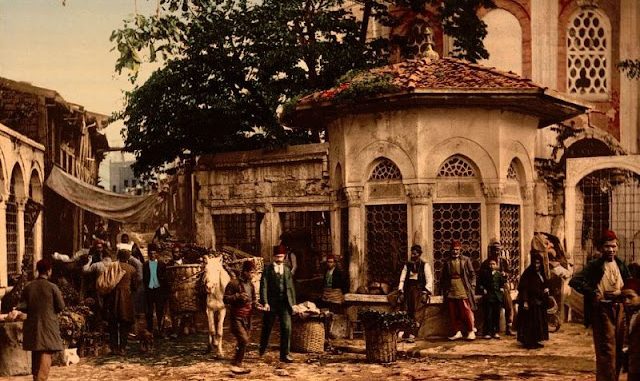
A street at Stamboul with fountain, Constantinople, Turkey, circa 1890s
A part of the Eyoub (i.e., Uyüp) cemetery, Constantinople, Turkey, circa 1890s
Alman (German) Fountain, Constantinople, Turkey, circa 1890s
Barbers near Seraskierrat, Constantinople, Turkey, circa 1890s
Bosphorus (i.e., Bosporus), Rumeli and Anadali-Hissar, (i.e., Anadolu Hissarı), Constantinople, Turkey, circa 1890s



Leave a Reply